In numbers
$5.5B in new commercial agreements announced in India
$70B target for Canada–India trade by 2030
$10B potential investment in Canada from Australia’s IFM
$40B current Canada–Japan bilateral trade
3 countries visited in one week: India, Australia, Japan
As global tensions rise — from renewed U.S. tariffs to instability in the Middle East and growing competition over technology and supply chains — Canadian Prime Minister Mark Carney’s Indo-Pacific tour offers a window into how Ottawa is positioning itself in a rapidly changing world.
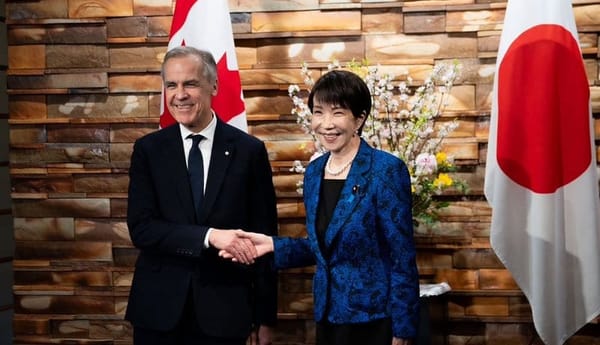
Over the course of just one week, Carney visited India, Australia, and Japan, signing or advancing a series of agreements across energy, defense, artificial intelligence, critical minerals, and supply chains. The message was clear: Canada wants to diversify its partnerships and anchor itself more deeply in the Indo-Pacific — the region expected to drive the majority of global economic growth in the coming decades.
The tour produced billions of dollars in investment commitments, multiple strategic partnerships, and several new institutional dialogues, all pointing to a broader shift in Canadian foreign and economic policy.
India: Energy, technology, and a reset in relations
The most commercially significant stop was India, where Carney and Prime Minister Narendra Modi announced a renewed strategic partnership focused on energy, talent, and technology.
The visit produced more than 10 commercial agreements worth over $5.5 billion, alongside plans to significantly expand bilateral trade.
Among the key announcements:
- A $2.6 billion uranium supply agreement between Canada’s Cameco and India’s Department of Atomic Energy covering nearly 22 million pounds of uranium from 2027 to 2035.
- Negotiations to finalize a Comprehensive Economic Partnership Agreement (CEPA) aimed at doubling bilateral trade to $70 billion by 2030.
- A Strategic Energy Partnership covering LNG, LPG, hydrogen, solar, and nuclear energy cooperation.
- Two new Memorandums of Understanding on critical minerals and energy cooperation designed to diversify supply chains.
- The launch of a Canada-India Talent and Innovation Strategy, including 13 university partnerships and up to $100 million in scholarships and research programs led by Canadian institutions.
India already represents one of Canada’s most important economic relationships. In 2024, total Canadian direct and indirect investment in India surpassed $110 billion, and the country’s 1.4 billion population makes it the fastest-growing major economy in the world.
For Ottawa, strengthening ties with India serves two purposes: tapping into one of the largest emerging markets on earth and anchoring Canada more firmly inside Indo-Pacific economic networks.
Australia: Critical minerals, defense, and AI
Carney’s next stop, Australia, focused less on trade deals and more on building the industrial and security foundations of allied cooperation.
The two countries announced new partnerships in critical minerals, defense, clean energy, and artificial intelligence.
Highlights include:
- Australia joining Canada’s G7-backed Critical Minerals Production Alliance, aimed at diversifying supply chains for minerals used in batteries, defense technologies, and advanced electronics.
- A Clean Energy Partnership to expand trade and investment in renewable energy technologies and modern electricity grids.
- A planned $10 billion investment in Canada by Australian infrastructure investor IFM, part of broader talks with pension funds managing nearly $7 trillion in capital.
- Expanded defense cooperation, including Canadian Armed Forces training on Australia’s Arctic Over-the-Horizon Radar system beginning in 2026 as part of Canada’s NORAD modernization.
- A new AI Safety cooperation agreement linking Canada’s and Australia’s national AI institutes.
The two governments also agreed to deepen cooperation on defense procurement, intelligence sharing, and joint military activities in the Indo-Pacific.
Taken together, the agreements reflect growing coordination among middle powers seeking to strengthen supply chains and defense capabilities amid intensifying geopolitical competition.
Japan: A new Comprehensive Strategic Partnership
The final stop of the tour, Japan, focused on elevating an already strong relationship to a higher strategic level.
Canada and Japan announced the creation of a Comprehensive Strategic Partnership, supported by a new Canada-Japan Strategic Roadmap covering six major areas:
- defense and security
- economic security and supply chains
- trade and investment
- energy and food security
- climate and Arctic cooperation
- cultural and academic exchange
The two countries already maintain nearly $40 billion in bilateral trade, and the new framework aims to deepen cooperation across emerging technologies, energy, and defense.
During the visit, the two governments agreed to:
- launch a new Economic Security Dialogue focused on supply chains and technological resilience
- create a Cyber Policy Dialogue addressing cybersecurity threats and digital infrastructure protection
- sign three memorandums of cooperation covering crisis response, coast-guard coordination, and joint patrols against illegal fishing in the North Pacific
The partnership also reinforces shared commitments to a “free and open Indo-Pacific”, a concept increasingly central to regional security strategy.
The broader strategy: diversification
Taken together, the three visits reveal a consistent theme: economic and strategic diversification.
Canada’s economy remains deeply tied to the United States, which absorbs roughly three-quarters of Canadian exports. But rising protectionism, tariff disputes, and geopolitical volatility have made that reliance increasingly risky for Ottawa.
Carney’s tour suggests Ottawa is trying to broaden its options.
Across India, Australia, and Japan, the agreements focus heavily on sectors likely to define the next phase of global competition:
- critical minerals
- energy security
- artificial intelligence
- defense technology
- supply-chain resilience
These are precisely the areas where countries are increasingly trying to reduce dependence on geopolitical rivals while strengthening cooperation with trusted partners.
Why it matters now
The timing of the tour is not accidental.
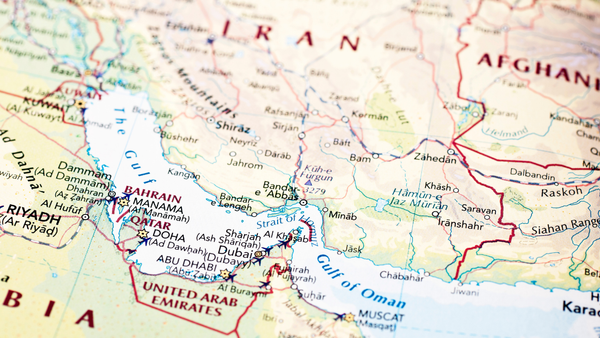
Global trade is facing renewed uncertainty as the United States expands tariff policies, while instability in the Middle East is putting pressure on energy markets and shipping routes such as the Strait of Hormuz.
At the same time, competition between major powers is reshaping supply chains in technology, minerals, and defense industries.
In this environment, many middle powers — including Canada, Australia, Japan, and India — are increasingly working together to build parallel networks of trade, energy, and security cooperation.
Carney’s Indo-Pacific tour is part of that broader shift.
The bottom line
In just a few days, Canada secured over $5.5 billion in new commercial agreements, advanced a $70 billion trade target with India, attracted up to $10 billion in potential investment from Australia, and launched a new strategic partnership with Japan anchored in nearly $40 billion in bilateral trade.
But the deeper significance is strategic rather than transactional.
As the global order becomes more fragmented, Canada is trying to embed itself inside a network of Indo-Pacific partnerships spanning energy, technology, defense, and supply chains.
Whether these initiatives translate into lasting economic and geopolitical influence will depend on implementation.
But one thing is clear: Ottawa is signaling that the future of Canada’s global engagement will increasingly run through the Indo-Pacific.