Who does the Strait of Hormuz legally belong to?
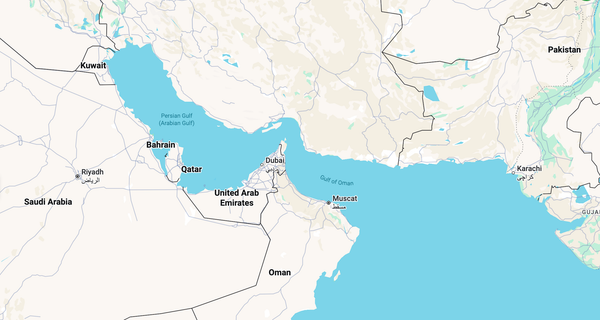
The clearest answer is this: no single state owns the Strait of Hormuz as a whole. The waterway lies between Iran to the north and Oman to the south, and both states have sovereignty over their own territorial seas. But the strait itself is also an international strait used for global navigation, which means it is governed not only by coastal sovereignty, but by the law of the sea. In practice, that means Iran and Oman border it, but neither can simply treat it as private national water in the way a state controls an internal harbor.
That distinction matters because the Strait of Hormuz is not just another maritime boundary. It is the only sea passage linking the Persian Gulf to the Gulf of Oman and the Arabian Sea, and at its narrowest point it is about 29 nautical miles wide. The navigable shipping system is much tighter than that: two-mile inbound and outbound lanes separated by a two-mile buffer. The International Energy Agency says around 20 million barrels per day of crude oil and oil products moved through the strait in 2025, or about a quarter of global seaborne oil trade, with limited alternatives to bypass it.
So legally, what governs passage?
The key framework is the UN Convention on the Law of the Sea, known as UNCLOS. Under Part III of the convention, straits used for international navigation fall under the regime of transit passage. Article 38 provides that “all ships and aircraft enjoy the right of transit passage,” and Article 44 says states bordering such straits “shall not hamper transit passage” and that there shall be “no suspension” of it. In other words, coastal states do not lose sovereignty over their territorial waters, but that sovereignty is limited by the international right of passage through the strait.
That is why the question is not really “Who owns Hormuz?” but rather how sovereignty and transit rights coexist there. Iran and Oman each control their side of the coastline and territorial sea. They can adopt certain navigation and safety regulations, and they helped establish the traffic separation scheme that the IMO adopted for Hormuz. But those powers are not unlimited. Under the law of the sea, coastal states may regulate for safety, pollution, fishing, and similar matters, yet those rules may not have the practical effect of denying, hampering, or impairing the right of transit passage.
This is where the history becomes important.
For decades, the legal status of major straits was contested because expanding territorial seas threatened to swallow up key shipping routes. Iran extended its territorial sea in 1959, and Oman followed in 1972. That meant the Strait of Hormuz became fully overlapped by Iranian and Omani territorial waters. The international response was not to accept closure, but to develop the modern law of straits during the long UN negotiations that led to UNCLOS in 1982. The compromise was simple but consequential: coastal states would keep sovereignty over their territorial seas, while user states would retain a non-suspendable right of transit through international straits.
Where do Iran and Oman stand legally?
Oman is a party to UNCLOS. Iran signed UNCLOS but did not ratify it. Oman’s declarations emphasize its sovereignty and even require prior permission for warships in Omani territorial waters; Iran’s declaration argued that some convention rights, including transit passage, should benefit only states parties. But that does not settle the issue in Iran’s favor. Even the U.S. Congressional Research Service notes that UNCLOS is generally viewed as reflecting customary international law on many navigation questions, including transit through international straits. That is one reason Iran’s current push for tolls or selective access has met strong legal resistance.
The United States, notably, is also not a party to UNCLOS, but Washington has long treated many of its navigation rules as reflecting customary international law and has enforced them through its Freedom of Navigation program. A CRS legal sidebar states that the U.S. has specifically asserted navigation claims against both Iran and Oman related to transit through Hormuz. That is the legal basis for the longstanding American position that the strait cannot be closed and that coastal states cannot require permission in ways that nullify transit passage.
So what rights do Iran and Oman actually have?
They have real rights — but not full discretion.
Iran and Oman have sovereignty over their territorial seas, can police threats to their security, can designate and maintain sea lanes with the help of international organizations, and can issue rules on navigational safety and environmental protection. They also have the practical advantage that geography gives them: if either state chooses to harass shipping, the world feels it immediately. But under the transit passage regime, they do not have a recognized right to shut the strait to ordinary international navigation, suspend transit passage, or impose discretionary tolls simply because they control adjacent coasts.
That is also why the current Iranian argument is so controversial. Reuters reported this week that the International Maritime Organization warned that tolls in Hormuz would set a “dangerous precedent,” and said there is no international agreement allowing states to introduce tolls for transit through international straits. The IMO position tracks the broader legal logic of UNCLOS: passage in an international strait is a right, not a service sold by the bordering state.
What about the United States — what rights does it have?
The United States does not have sovereign rights over the strait. It cannot claim ownership, administer the waterway, or rewrite its legal regime by force. But it does claim the rights enjoyed by user states under the law of the sea: commercial vessels and warships may transit the strait continuously and expeditiously, without asking Iran for political permission. That is why the U.S. treats naval movement through Hormuz as a matter of freedom of navigation, not Iranian discretion. Reuters reported on April 11 that U.S. warships had begun moving through the strait as part of a broader mission to clear mines and restore maritime traffic.
Still, law and power are not the same thing.
Even when the legal case favors freedom of transit, Iran retains the ability to disrupt shipping through force, mining, intimidation, or informal control of routing. That is exactly what has made Hormuz such an effective bargaining chip in the current crisis. Reuters reported that the White House entered the Islamabad talks skeptical that the strait could be reopened quickly, while Tehran was demanding sanctions relief and even acknowledgment of its authority over Hormuz, including proposed transit fees and access controls. In other words, Iran is trying to convert physical leverage into political recognition.
That is why Hormuz matters so much in the current U.S.-Iran negotiations.
This is not just a shipping dispute. It is a test of whether the talks will endorse a core international principle — that major chokepoints remain open under law — or drift toward a transactional arrangement in which passage depends on Tehran’s approval.
The stakes go well beyond Washington and Tehran. The legal regime of Hormuz affects not only oil markets, but also the wider principle governing the world’s chokepoints. If one bordering state can successfully turn an international strait into a toll gate or selective corridor, that precedent could echo far beyond the Gulf. That is why the legal fight over Hormuz is not technical. It is about whether international navigation remains governed by rules — or by whoever can impose the highest cost at the narrowest point on the map.
Bottom line:
The Strait of Hormuz lies between Iran and Oman, and both have sovereignty over the waters off their coasts. But the strait is also an international waterway governed by the law of transit passage. Iran and Oman have rights to regulate safety and protect their security; they do not have a clear legal right to suspend ordinary transit or charge discretionary tolls for passage. The U.S. has no ownership claim there, but it does claim the right, shared by all user states, to move ships through the strait under international law. What Tehran has in practice is leverage. What it has in law is narrower. And that gap is now sitting at the center of the U.S.-Iran talks.