The Middle East War: Objectives, Geography, and Consequences
A detailed analysis of the Israeli-U.S. strikes on Iran, regional escalation, energy chokepoints, regime structure, and global consequences.

– 7 min read

A detailed analysis of the Israeli-U.S. strikes on Iran, regional escalation, energy chokepoints, regime structure, and global consequences.
As reported in the previous Deep Dive, Iran and the United States had been engaged in a series of negotiations that appeared to culminate in an in-person meeting in Geneva.
Shortly after, Oman’s Foreign Minister, Badr Albusaidi, appeared on Face the Nation to share what at the time seemed like a breakthrough.
Hours before the U.S.–Israel military operations began, FM Albusaidi revealed that discussions had included a framework under which Iran would maintain ‘zero stockpiling’ of nuclear material.
The message followed high-level discussions in Washington between Albusaidi and Vice President JD Vance.
Hours later, coordinated U.S.–Israeli strikes on Iran began.
Before the attack, Admiral Brad Cooper, the top U.S. military officer at CENTCOM, sent a message to roughly 50,000 U.S. troops deployed across the region:
“By order of the President of the United States, we are embarking on a mission of profound consequence. The time for preparation is over. The time for action has arrived.”
“As we move from deterrence into active combat…”
“Be Relentlessly Lethal.”
“You are the shield of the free world, and today, you are its sharpest sword.”
The shift was clear: deterrence had ended. Active combat had begun.
The coordinated Israeli–U.S. strikes targeted Iranian leadership, nuclear and military infrastructure, naval assets, and communications hubs as part of the opening phase of the joint operation.
According to Iranian state media and regional reporting, the strikes hit:
Iranian and international media reported that Supreme Leader Ayatollah Ali Khamenei was killed in the initial strike wave.
Media reports further indicated that several senior military officials were killed, including:
The joint strikes also targeted key components of Iran’s strategic capabilities, including:
President Trump stated that U.S. forces had destroyed:
These strikes aimed to degrade Iran’s ability to project power, disrupt communications, and neutralize naval threats in the Gulf region.
The conflict did not remain confined to military targets.
Iranian officials reported that a strike on a girls’ elementary school in Minab killed more than 150 people, though independent verification remains limited. Damage was also reported at Gandhi Hospital in Tehran.
Israeli authorities reported that a missile struck a bomb shelter beneath a synagogue on March 1, killing nine people and wounding 28.
Missiles reportedly breached air defenses in West Jerusalem.
Tel Aviv and Haifa faced sustained strikes.
Hezbollah launched additional barrages from Lebanon.
U.S. officials confirmed that four American service members were killed in an Iranian strike on a U.S. base in Kuwait. The Department of Defense acknowledged the fatalities, marking the first confirmed U.S. military deaths in the current phase of the conflict. President Trump stated there would “likely be more” casualties.
Shipping data indicated a sharp slowdown in traffic through the Strait of Hormuz, while global oil benchmarks surged by at least 8 percent.
As the conflict has widened, retaliation has moved beyond Iran and Israel to the broader Gulf region.
Iran has launched missiles and drones at multiple Arab states hosting U.S. military assets, triggering explosions and defensive interceptions in Kuwait, Qatar, Bahrain, and the United Arab Emirates.
In the UAE, debris from intercepted missiles caused damage in Dubai and Abu Dhabi, including residential and commercial areas and damage around high-profile tourist destinations such as Palm Jumeirah and the Burj Al Arab. State authorities reported civilian casualties and dozens injured in these strikes.
Strikes have also affected critical infrastructure and transit hubs across the Gulf, including airports and hotels — compounding disruptions to travel and commerce.
Embassies and military installations across the region have also been hit or threatened in the broader retaliation effort, raising tensions among Gulf Cooperation Council states.
Jordan reported that its air defenses intercepted Iranian missiles and drones aimed at its territory, with debris falling in multiple regions. Jordanian authorities stated there were no confirmed deaths but urged the public to remain vigilant as the defensive operations continued.
At an emergency Security Council meeting, UN Secretary-General António Guterres called for immediate de-escalation, condemning the strikes as unlawful under international law.
The United States and Israel have defended their actions as responses to a significant threat, while Iran has denied posing an imminent threat and framed its retaliation as defensive.
President Trump stated the operation could last “days” or up to “four to five weeks,” later adding the U.S. would continue “as long as needed to achieve the objectives.”
The operation is ongoing. Information changes by the hour.
But three core questions define this war.
President Trump stated the objectives:
Regime change was not explicitly declared policy.
Yet he noted that they had “knocked out the top 2–3 contenders” to replace Khamenei.
Prime Minister Netanyahu stated:
“We are conducting a campaign in which we are deploying the full power of the IDF like never before to secure our existence and our future. Joint efforts with the US allow us to do what I have been striving for over 40 years.”
So what are the real objectives?
Without defining them clearly, progress cannot be measured.
After Khamenei’s death, Iran invoked Article 111 of its Constitution.
State media announced a temporary leadership council composed of:
Under Article 111, this council assumes authority until the Assembly of Experts selects a new Supreme Leader.
This is not chaos.
It is constitutional continuity.
Arafi — a longtime protégé of Khamenei — represents ideological continuity, not rupture. Reports describe him as a hardliner with a modern technological focus, including AI-driven ideological expansion.
So did the regime change?
No.
If anything, the system adapted.
Iran is not structured as a monarchy dependent on one man. It is a hybrid clerical-republican system rooted in Velayat-e Faqih — the Guardianship of the Jurist — where unelected clerical oversight ultimately controls elected branches.
Eliminating the Supreme Leader does not automatically dismantle the architecture.
If U.S. strikes continue for 4–5 weeks:
Will the IRGC be weakened enough for internal uprising?
Or will depletion of military capacity simply create chaos?
History warns us: removing leadership without post-conflict stabilization planning can lead to humanitarian catastrophe.
For now, negotiation signals from both sides appear tactical rather than sincere.
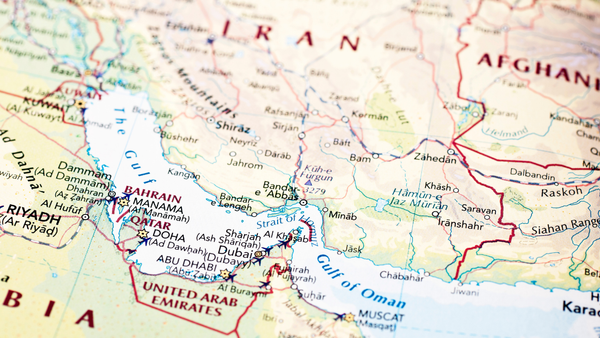
Geography may define the length of this war.
Roughly 20% of global oil trade passes through the 21-mile-wide Strait of Hormuz, the narrow maritime corridor between Iran and Oman that functions as the world’s most critical energy chokepoint.
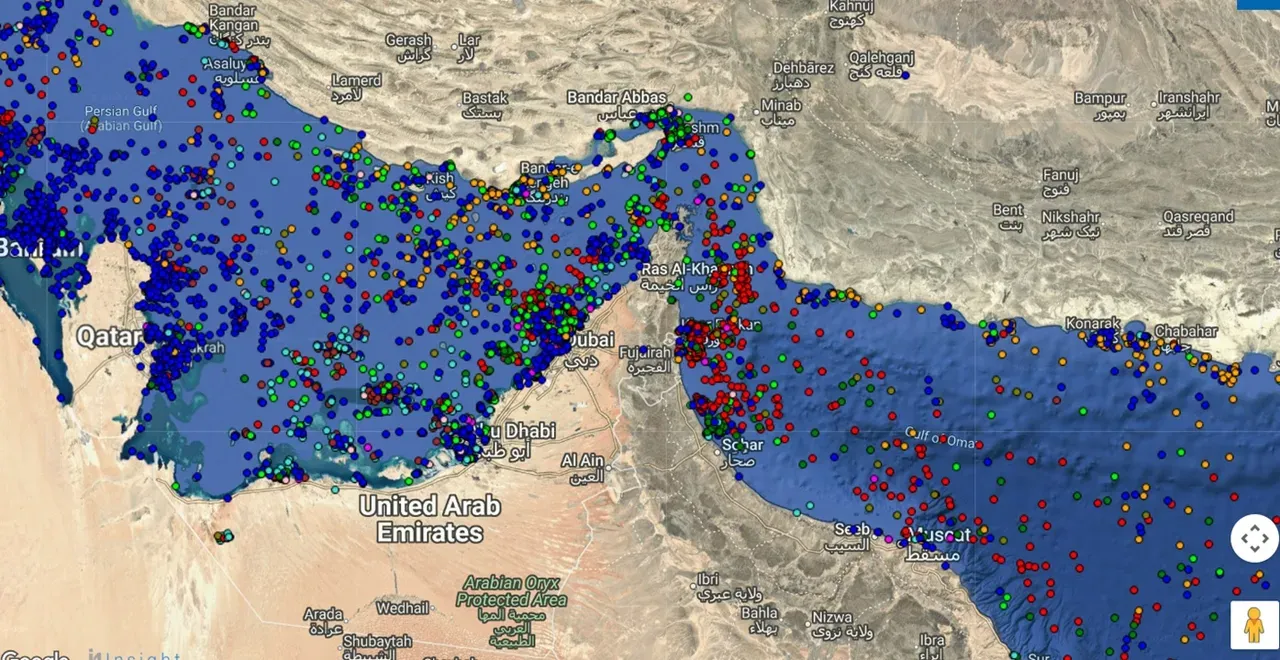
Shipping data from maritime tracking firms indicated that traffic through the strait dropped by approximately 70% in the immediate aftermath of the escalation.
Analysts estimate that more than 40% of China’s crude oil imports transit the Strait of Hormuz, underscoring Beijing’s exposure to disruptions at this critical route.
Oil prices will play a decisive role in determining how long either side can sustain escalation.
This is not only military math.
It is economic math.
The most dangerous ecological scenario is not Natanz.
It is Bushehr — Iran’s operational nuclear power plant on the Persian Gulf.
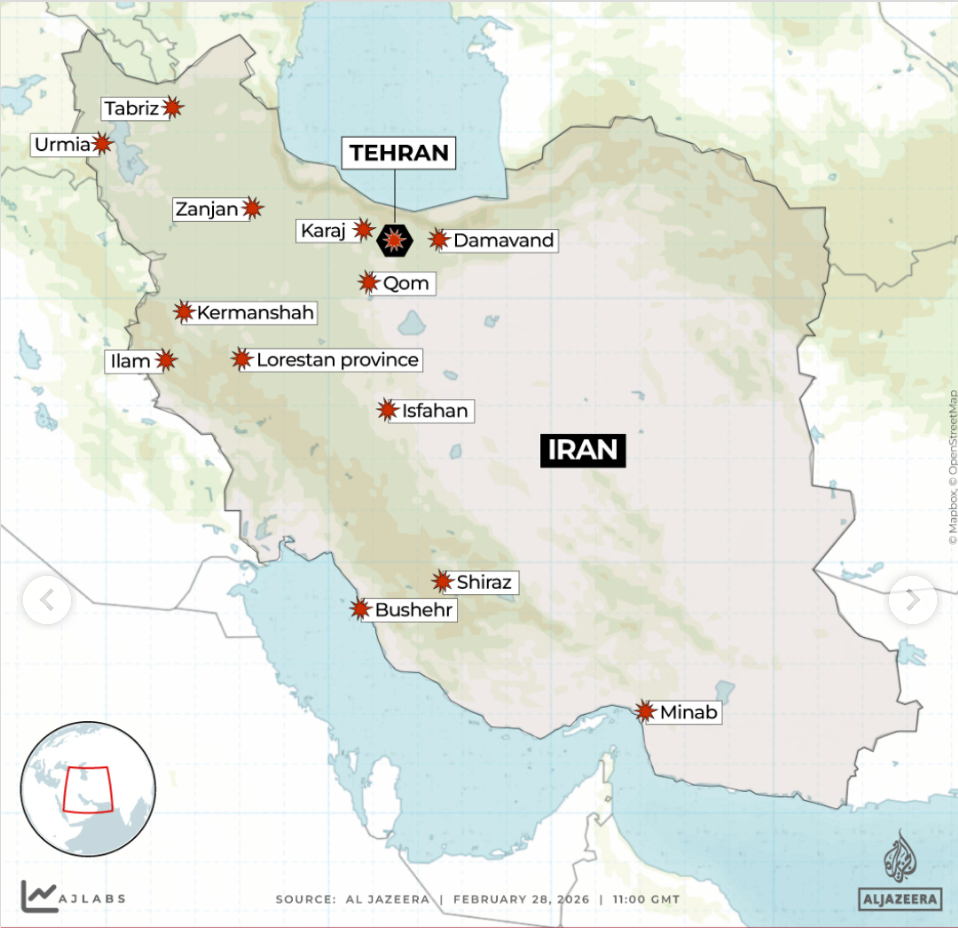
Unlike enrichment facilities, Bushehr contains active radioactive fuel.
A strike could cause:
The IAEA confirmed previous strikes caused no off-site radiation.
Bushehr would be different.
Comparable to Chernobyl or Fukushima in regional impact.
Simultaneous escalations:
Current numbers:
Even limited destabilization could rapidly shift migration flows.
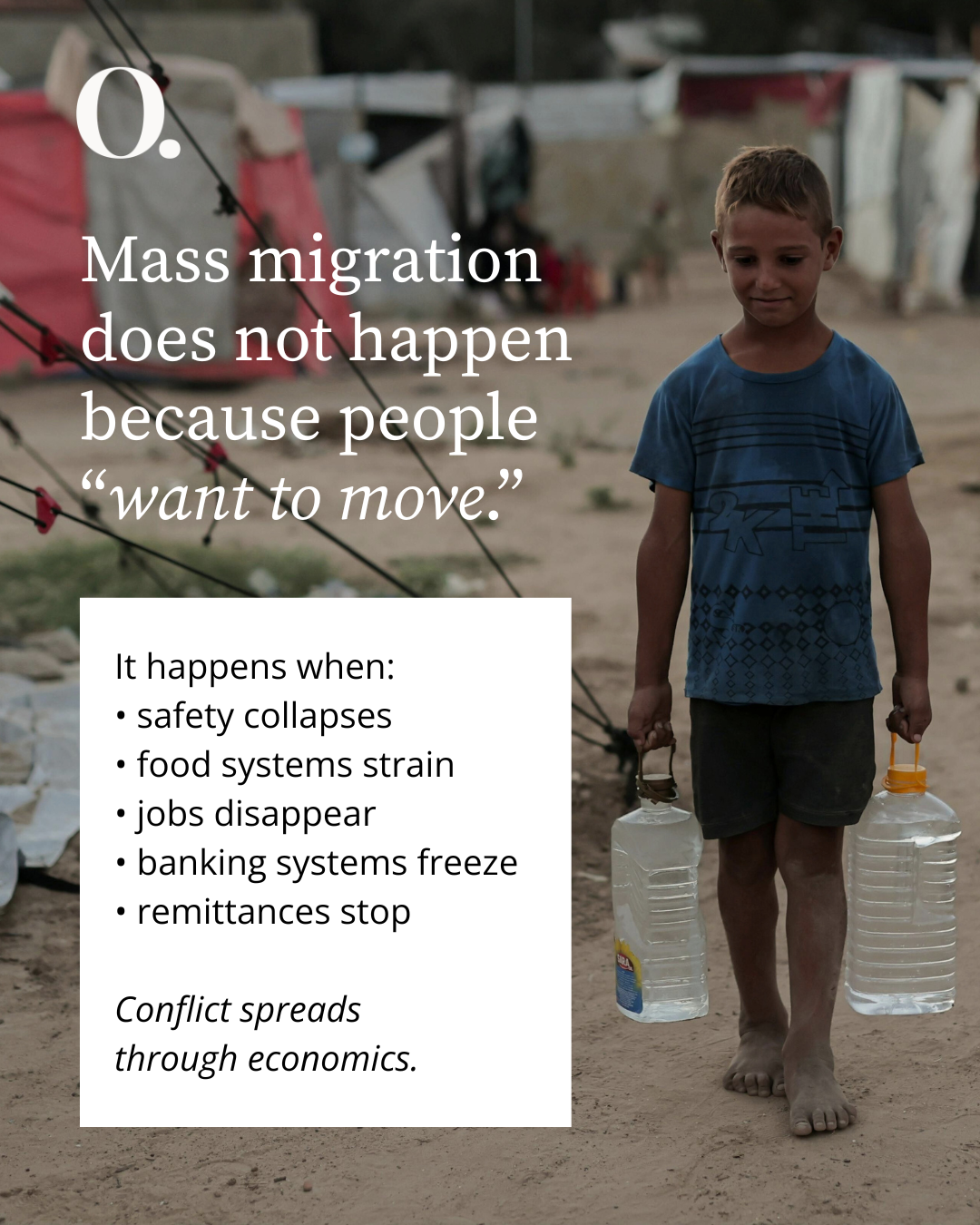
Migration is not just humanitarian.
It is political.
It shapes elections.
The world is interconnected.
Europe remains at war, as Ukraine continues to resist Russia’s invasion.
Patriot systems urgently requested by Kyiv are now engaged elsewhere.
The longer the United States is deeply involved in Iran, the more the global balance shifts.
Taiwan is heavily dependent on Middle Eastern oil, much of which transits the Strait of Hormuz — making any prolonged disruption strategically significant.
Sustained disruption would tighten global energy markets, increasing leverage for major producers — including Russia — at a time when China is closely watching regional stability.
Russia benefits from higher oil prices.
Sanctions caps weaken when markets tighten.
And NATO?
The United Kingdom is aiding Qatari defense.
A base in Cyprus was struck.
France signaled conditional support within the scope of international law.
Spain asked U.S. jets to leave its base to avoid becoming both a target and a participant.
Long entanglements carry the risk of alliance drag-in.
Underestimating migration is not only inhumane.
It is reckless.
Large-scale displacement reshapes politics.
Weaponized migration narratives fuel extremist movements.
That may determine elections.
And elections determine wars.
How long can either side afford this?
Financially.
Militarily.
Politically.
Ecologically.
And perhaps most importantly:
What does “victory” actually mean?
Until objectives are clearly defined, this war risks expanding faster than it can be controlled.
And that — historically — is when conflicts stop being strategic and start becoming systemic.