Qatar Halts LNG Production — And the Shock Is Spreading
Europe’s energy transition, Russia’s fiscal leverage and global inflation are now colliding as Gulf instability ripples through energy and financial markets.

– 3 min read

Europe’s energy transition, Russia’s fiscal leverage and global inflation are now colliding as Gulf instability ripples through energy and financial markets.
This began with Qatar.
QatarEnergy has announced a halt to liquefied natural gas (LNG) production and several downstream industrial outputs, including urea, polymers, methanol, aluminum and other products.
The company said it “values its relationships with stakeholders” and will continue to provide updates.
But the market reaction makes clear: this is not a localized disruption.
It is a systemic stress event.
Qatar supplies roughly 20% of global LNG.
Removing Qatari volumes — even temporarily — eliminates approximately one-fifth of global LNG liquidity. That is not capacity the market can quickly replace.
LNG is globally interconnected. Cargoes are rerouted. Benchmarks spike. Governments reassess storage strategy.
Europe is particularly exposed.
After Russia’s full-scale invasion of Ukraine, the European Union accelerated its exit from Russian pipeline gas and LNG.
The latest approved measures include:
Qatar was expected to act as a stabilizing supplier during that transition.
But EU storage currently sits near 30% — a fragile level.
If Qatari LNG remains offline for an extended period, European governments may face a difficult choice:
This shock does not occur in isolation.
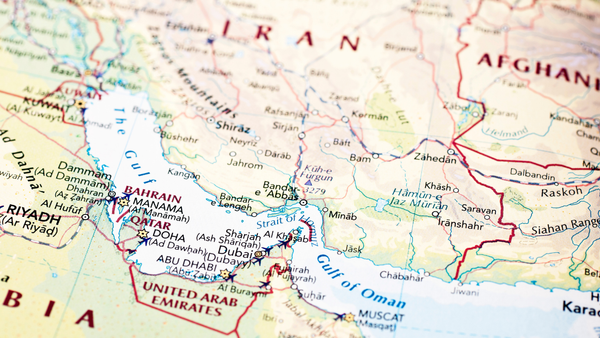
A significant share of global oil and LNG flows through the Strait of Hormuz — a narrow maritime corridor that functions as a pricing lever for global energy.
When instability rises in the Gulf, markets reprice immediately.
Brent crude has surged above $80 per barrel — its highest level since mid-2024 — while European natural gas futures have roughly doubled in recent sessions.
This is no longer just an LNG halt.
It is a regional energy risk premium being layered back into global benchmarks.
The ripple effects are now visible across financial markets.
Global equities have sold off sharply. Bond yields have risen as investors reassess inflation expectations and scale back assumptions about central bank rate cuts this year.
Higher energy prices feed directly into:
In a prolonged conflict scenario, the combination of higher energy costs, disrupted trade routes and confidence shock can become a meaningful drag on global growth — at precisely the moment the world economy was still adjusting to tariff-related inflationary pressures.
This is how regional conflict becomes global macro tightening.
The U.S. currently supplies roughly 50–60% of EU LNG imports.
American exporters operate with more flexible contracts and shorter shipping distances to Europe.
Higher European gas benchmarks widen U.S. export margins almost automatically.
If Qatari supply remains constrained, the United States strengthens its position as Europe’s primary LNG backstop.
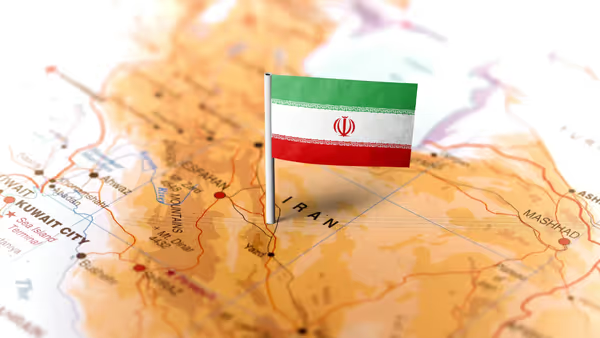
In January 2025, Russia and Iran signed a 20-year Comprehensive Strategic Partnership Treaty covering defense, energy, finance and regional security, formally entering into force in October 2025.
Whether directly connected or not, prolonged Gulf instability structurally benefits Russia.
If global energy benchmarks rise:
Energy revenues account for roughly 40% of Russia’s federal budget, much of which supports military operations.
Even absent direct involvement, tighter markets reinforce Moscow’s position.
Approximately 80–90% of Qatari LNG is directed toward Asia under long-term contracts — particularly China, Japan and South Korea.
In tightening markets:
Energy security is leverage.
Contract structure matters.
QatarEnergy’s halt extends beyond LNG.
Suspensions include:
That expands risk into agriculture, chemicals, construction and manufacturing.
Energy shocks rarely remain contained within energy markets.
The duration will determine whether this remains volatility — or becomes structural realignment.
This began with Qatar.
But it is no longer about Qatar alone.
It is a Europe story.
A U.S. export story.
A Russia budget story.
A China leverage story.
A central bank story.
Energy markets are the bloodstream of geopolitics. When a major artery tightens, the entire system feels it.
In the upcoming ONEST Deep Dive, we will examine:
The full strategic breakdown will be available to ONEST supporters.