APRIL 1 : Moon Mission, War Escalation, NATO Fractures

– 7 min read


“We are going to hit them extremely hard over the next two to three weeks… We are going to bring them back to the stone ages where they belong.” — Donald Trump
The day unfolded across three parallel tracks — and they do not exist separately.
First, humanity returned to deep space. NASA launched Artemis II, sending astronauts toward the Moon for the first crewed lunar mission in more than half a century. It is a technical milestone, but also a strategic one: this is not exploration for symbolism, but for sustained presence.
At the same time, the gap between U.S. and Iranian messaging widened further. Washington is projecting control, progress, and nearing completion of military objectives. Tehran is rejecting that framing entirely, denying negotiations and positioning itself as the victim of unjustified aggression. That gap matters — because if either side were meaningfully shifting position, it would be visible well beyond statements.
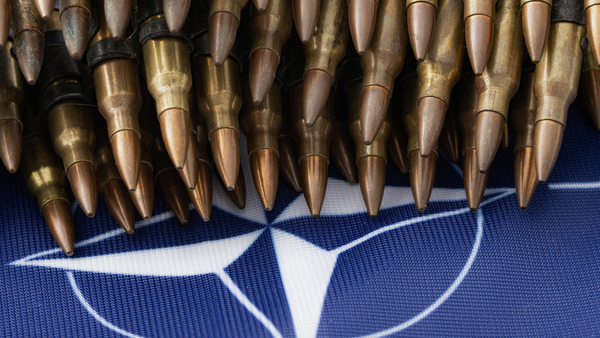
And finally, pressure inside the Western alliance is no longer contained. The United States is openly pushing European allies to participate in securing the Strait of Hormuz, while those same allies are refusing — in some cases blocking U.S. military access outright. What had been policy friction is now structural strain inside NATO.
For the first time since the Apollo era, humans are on a path back to the Moon.
NASA’s Artemis II mission launched from Kennedy Space Center, sending four astronauts aboard the Orion spacecraft on a planned 10-day journey that will take them around the Moon and back to Earth.
This is not a landing mission — it is a test. But it is a decisive one.
The crew — Reid Wiseman, Victor Glover, Christina Koch, and Canadian astronaut Jeremy Hansen — will test life-support systems, spacecraft handling, and deep-space operations in conditions that have not been experienced in decades.
Roughly 49 minutes after launch, Orion was placed into orbit. A second burn will push it into a high Earth orbit extending approximately 46,000 miles from the planet, before sending it toward the Moon through a translunar injection maneuver.
During the mission, astronauts will:
NASA leadership made clear this is not a standalone achievement.
“Artemis II is a test flight, and the test has just begun… We are one mission into a long campaign.”
Canadian Prime Minister Mark Carney underscored the broader significance, noting that Canada becomes only the second nation to send an astronaut on a lunar mission.
This is the beginning of a sustained presence strategy — not a symbolic return.
Overnight, conflicting narratives hardened further.
Iranian President Pezeshkian issued a direct message to the American public, claiming the United States had attacked Iran “for no reason” and asserting that Iran has never held hostility toward the U.S.
That claim is not supported by the historical record.
The Iranian regime has, for decades:
At the same time, another reality exists:
Attacks on sovereign states — even those governed by hostile regimes — raise fundamental legal questions around proportionality, legitimacy, and the boundaries of self-defense.
Both realities coexist. Neither cancels the other.
President Donald Trump addressed the nation following weeks of military operations.
He began with Artemis II — then pivoted immediately to Iran.
The tone was not cautious. It was definitive.
He described Operation Epic Fury as delivering “overwhelming victories” and stated that core military objectives are nearing completion. He framed the remaining phase as short — but intense.
“Tonight, Iran’s navy is GONE. Their air force is in ruins… Never in the history of warfare has an enemy suffered such clear and devastating large-scale losses in a matter of weeks.”
“We are going to hit them extremely hard over the next two to three weeks.”
“We are going to bring them back to the stone ages where they belong.”
“We have all the cards; they have none.”
He outlined objectives that go beyond immediate battlefield gains:
He also:
One line stands out strategically:
“Go to the Strait and just take it.”
That is not rhetorical. It is a directive — aimed at allies.
Interpretation:
This is not de-escalation language. It signals either:
Despite declarations of success, markets reacted differently.
Oil prices continued to rise after the speech.
That tells us something important:
Markets are pricing risk — not messaging.
The Strait of Hormuz is now the central pressure point of the conflict.
Traffic has dropped significantly.
Iran is actively inspecting vessels.
Tankers are being struck.
Recent incidents include:
The claim that the Strait will “open naturally” does not align with current conditions.
This is now a controlled chokepoint — not a temporary disruption.
Hundreds of Special Operations Forces, alongside Marines and paratroopers, are now positioned in the region.
Their presence provides options that go beyond airstrikes.
Scenarios under discussion include:
These are operational frameworks for ground involvement.
The conflict continues to expand across multiple fronts.
In Lebanon, Israel plans to destroy border towns and maintain a long-term presence in the south. Up to 600,000 people may be unable to return to their homes.
European countries have called for a ceasefire, while Lebanese authorities have condemned the operations and called for international intervention.
On the Iran front, there is still no alignment:
At the same time:
Across the region:
The war is also reshaping internal dynamics.
More than 3,000 people have reportedly been arrested across the region during the first month of conflict, raising concerns about repression and restrictions on free expression.
The energy disruption is no longer regional.
Countries across Africa and South Asia are now facing:
The UN Development Program estimates total losses between $120 billion and $194 billion, with regional GDP declining between 3.7% and 6%.
Indonesia has already responded with:
Tensions inside NATO are now visible.
President Trump has:
European allies have resisted.
Spain and France blocked U.S. airspace access.
Italy denied landing rights.
The UK reiterated it does not want to be “dragged into” the war.
At the same time, Trump has publicly criticized allies, while discussions inside his administration include weakening U.S. commitments.
This is no longer disagreement over policy — it is strain on the structure itself.
According to the Financial Times, the United States may condition continued weapons support for Ukraine on European involvement in securing the Strait of Hormuz.
If accurate, that creates a direct linkage between:
Meanwhile, President Volodymyr Zelenskyy continues diplomatic engagement, proposing an Easter ceasefire and working on strengthened security guarantees.
“A ceasefire during Easter could be the signal that tells everyone – diplomacy can succeed.”
The State Department is restructuring Foreign Service recruitment and training, emphasizing merit-based advancement and revised testing standards.
At the same time:
Across the world:
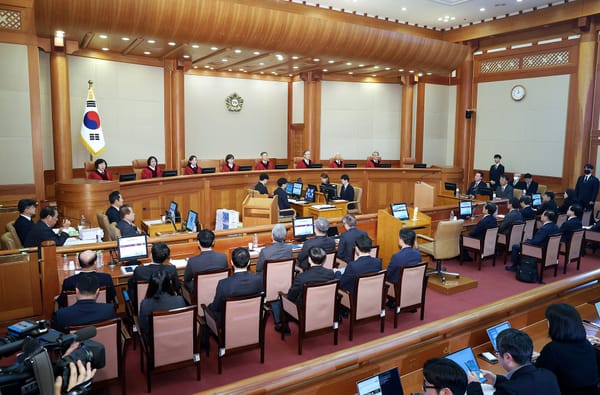
NEW on ONEST Voices: an exclusive conversation with South Korean judge Eungi Hong on democratic resilience, constitutional justice, and public trust.
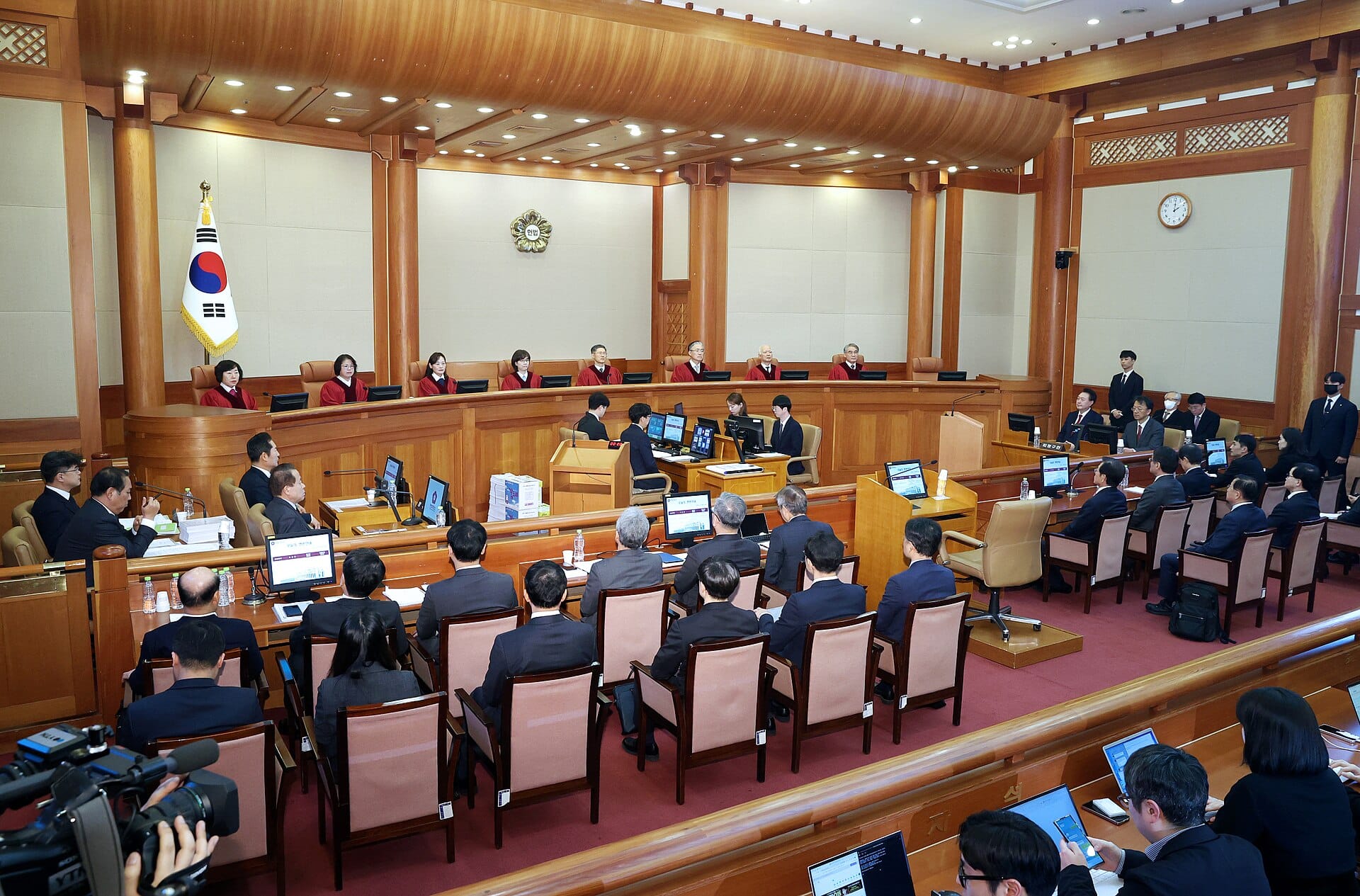
Read: The South Korea Lesson: How Democracy Holds — and What It Takes
In St. Peter's Square, a sculpture shifts depending on how you see it.
Created by Canadian sculptor Timothy P. Schmalz, the piece appears at first as a homeless figure. From another angle, wings emerge.
Often referred to as “Angel in Disguise,” it invites a second look — not just at the figure, but at the act itself.
The message is subtle, but precise:
Every genuine deed carries more than one value — the one we see, and the one we don’t.