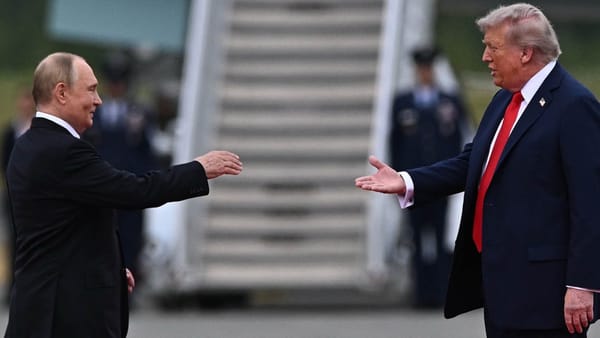
The administration of President Donald Trump has moved to ease certain sanctions on Russia in an effort to stabilize global oil markets as the conflict involving Iran continues to disrupt energy supplies.
The measure does not lift the broader sanctions regime against Russia. Instead, it provides a temporary waiver allowing transactions involving Russian oil already in transit to proceed, a step aimed at stabilizing global energy markets during the Middle East crisis.
According to reporting by The New York Times, the decision was confirmed by Scott Bessent, who acknowledged the geopolitical complexity of the move.
Bessent said it was “unfortunate” that the temporary measure could benefit Russia economically but argued that "allowing Russian oil to flow more freely was necessary to prevent further disruptions in global energy markets during the current Middle East crisis".
Earlier, ONEST examined how the expanding conflict in the Middle East could reshape global energy markets and shift geopolitical leverage toward alternative suppliers, including Russia.
Read more: Qatar Halts LNG Production — And the Shock Is Spreading
Oil markets under pressure
Energy markets have been increasingly volatile since the latest escalation across the Middle East, with attacks on infrastructure and concerns about shipping routes raising fears of supply shortages.
Strikes on oil facilities in Iran, Bahrain, and Saudi Arabia, combined with uncertainty surrounding regional transport routes, have contributed to rising prices and concerns about energy security.
Strait of Hormuz risk driving market anxiety
Much of the pressure on global energy markets is linked to concerns about the Strait of Hormuz, one of the world’s most critical oil transit routes.
Roughly 20 percent of global oil supply passes through the narrow waterway each day, making it a vital corridor for energy exports from Gulf producers.
Any disruption — or even credible threats to shipping — can rapidly push global oil prices higher, forcing governments to look for alternative supplies to stabilize markets.
Allowing additional Russian oil exports into global markets could help offset some of those disruptions, particularly if regional production or shipping lanes become further constrained.
Russia stands to benefit
The policy shift also highlights a geopolitical consequence of the widening conflict.
As the crisis expands, Russia — already a major global energy supplier — may gain economically from increased demand for its oil exports.
Analysts have noted that conflicts affecting Middle Eastern supply historically push buyers toward alternative producers, including Russia.
This dynamic means that, whether by design or circumstance, Moscow may benefit financially from market instability triggered by the conflict. Higher energy revenues have historically played a critical role in sustaining Russia’s state budget, including funding for its ongoing war against Ukraine.
A complex strategic balancing act
Officials have emphasized that the move is intended as a short-term market stabilization measure, not a broader shift in U.S. policy toward Russia.
Still, the decision illustrates how rapidly evolving conflicts can create difficult trade-offs for policymakers trying to balance sanctions policy, energy markets, and geopolitical strategy.
As the war in the Middle East continues to reshape regional dynamics, the global ripple effects are already becoming visible — not only in humanitarian and security terms, but also in the structure of global energy markets.
In geopolitics, analysts often note that actions tend to speak louder than official statements.
Watching ahead
Another factor to watch is Europe’s evolving energy sanctions. The European Union has already approved a phased ban on Russian natural gas imports, including liquefied natural gas (LNG). Under the current timeline, restrictions on Russian LNG tied to certain short-term contracts are set to begin on April 25, 2026, with a broader phase-out continuing through 2027.
If the conflict in the Middle East continues — or expands in ways that further strain global energy supplies — analysts are increasingly asking whether European governments will be able to maintain these restrictions, particularly if energy prices spike or supply chains tighten.
As the crisis unfolds, the interaction between Middle East conflict dynamics, global oil supply, and sanctions policy toward Russia may prove to be one of the most consequential ripple effects of the war.