Prime Minister Mark Carney’s trip to Norway and the United Kingdom was not simply a round of bilateral meetings. It was an early signal of how his government wants to position Canada in a more dangerous and fragmented world: more active in the Arctic, more embedded in transatlantic defense and industrial cooperation, and more focused on turning security policy into economic strategy.
Taken together, Carney’s meetings with Norwegian Prime Minister Jonas Gahr Støre, German Chancellor Friedrich Merz, UK Prime Minister Keir Starmer, and Nordic leaders in Oslo point to a broader shift in Canada’s posture. Ottawa is increasingly framing the Arctic not as a distant frontier, but as a central theatre of sovereignty, alliance politics, technological competition, and long-term economic security.
That framing has been building for days.
Just before the European trip, Carney unveiled an ambitious new plan to defend, build, and transform Canada’s North, backed by more than $40 billion in investments and project commitments. The plan included major spending on Arctic military infrastructure, new operational hubs, airport upgrades, trade corridors, ports, hydro expansion, food security, and housing. The message was unmistakable: Canada wants to move from reliance to resilience, strengthen its control over its own Arctic future, and reduce dependence on others for its security and prosperity.
His Norway visit then gave that strategy an international dimension.
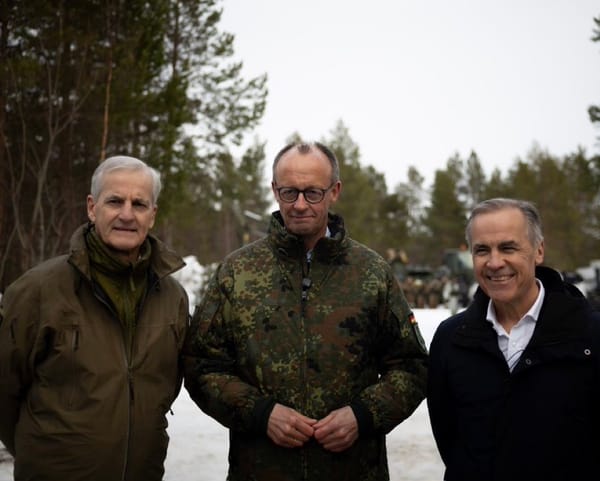
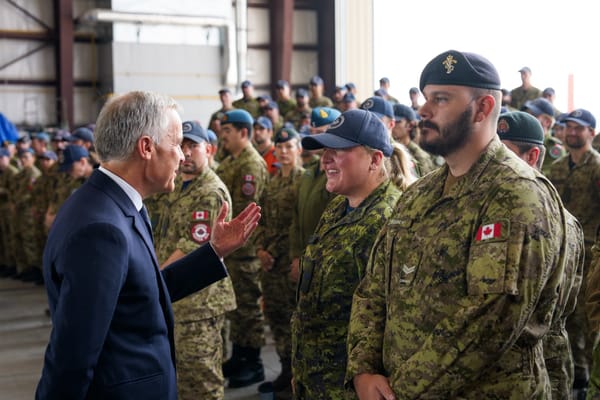
In Bardufoss, Carney met Støre and German Chancellor Friedrich Merz while attending NATO’s Exercise Cold Response, a major Arctic exercise involving roughly 30,000 personnel from 14 countries. The symbolism mattered. Canada was not only showing up for a NATO winter exercise; it was placing itself visibly inside the emerging northern security conversation alongside European allies who increasingly see the Arctic and High North as strategically vital.
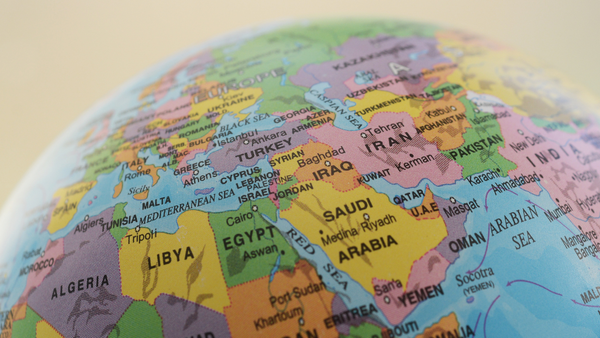
The three leaders discussed Russia’s war against Ukraine, instability in the Middle East, and the importance of avoiding further escalation. They also underscored the need for a just and lasting peace in Ukraine backed by credible security guarantees. In other words, the stop in Bardufoss linked Arctic deterrence directly to the wider European security crisis.
That same logic carried into Carney’s bilateral talks in Oslo with Støre.
There, Canada and Norway announced a new strategic partnership spanning Arctic security, space, artificial intelligence, critical minerals, trade, defense industrial capacity, energy, and climate cooperation. This was not a narrow diplomatic communiqué. It was a blueprint for how two Arctic NATO allies intend to work together in an era where supply chains, advanced technologies, and northern infrastructure have become part of national security itself.
One of the most important pillars was Arctic and defense cooperation. Canada and Norway agreed to deepen security coordination in the Arctic, establish a bilateral Arctic dialogue, and expand cooperation through exercises such as Operation NANOOK and Exercise Cold Response. They also signaled interest in secure military satellite communications arrangements to improve interoperability in the North.
That matters because Arctic defense today is not only about troop presence. It increasingly depends on the ability to monitor territory, communicate reliably in extreme conditions, detect threats early, and maintain year-round awareness in a region that climate change and geopolitics are making more accessible and more contested.
That is why space featured so prominently.
Canada and Norway agreed to deepen cooperation on space-based and dual-use capabilities, including Earth observation, navigation, secure communications, and maritime domain awareness. These tools are essential for sovereignty and security in the Arctic, where geography, weather, and distance make conventional infrastructure harder to rely on. They are also central to NATO readiness and to the growing overlap between civilian and military technologies.
Artificial intelligence was another major pillar of the partnership. The two countries agreed to explore cooperation on sovereign technology and AI, including infrastructure, research, standards, governance, secure supply chains, and digital capacity.
The language around “sovereign technology” is especially telling. It reflects a broader Western concern that strategic dependence on external providers, whether in compute, chips, cloud systems, or advanced models, can become a national vulnerability. Canada and Norway are effectively signaling that trusted democratic partners should build more of this capacity together.
Critical minerals formed the third major track.
The two governments signed a memorandum of understanding to strengthen cooperation on secure and resilient critical mineral supply chains. That includes promoting trade and investment, sharing technical knowledge, supporting geological cooperation, and exchanging best practices on mining, environmental assessments, mine closure, and Indigenous and community participation. This is about far more than raw materials. Critical minerals now sit at the center of defense production, clean energy systems, advanced manufacturing, and economic leverage.
There was also a clear defense-industrial message throughout the trip.
Carney emphasized Canada’s efforts to strengthen allied defense supply chains and highlighted the proposed Defense, Security and Resilience Bank as a way to mobilize financing at scale. He also pointed to growing industrial cooperation with Norway, including a $9.6 million contract awarded to Kongsberg Vanguard LP — a joint venture involving Norwegian and Canadian firms, to design future Canadian Coast Guard mid-shore multi-mission vessels under Canada’s National Shipbuilding Strategy.
That detail is important because it shows how this agenda is being operationalized. Governments are no longer talking only about collective defense in terms of troop deployments and military commitments. They are increasingly focused on who can finance production, who can build platforms, how to secure supply chains, and how allied industries can scale fast enough in a crisis.
Ukraine remained central throughout.
Canada and Norway reaffirmed support for Ukraine’s independence, sovereignty, and territorial integrity, while committing to continued military, economic, and reconstruction support. They also stressed the need to maintain sanctions pressure, including on Russian oil revenues and the shadow fleet. One of the most concrete outcomes was the announcement that Canada and Norway, in coordination with Ukraine, will organize a ministerial conference in Toronto on September 28–29, 2026, focused on prisoners of war, unlawfully detained civilians, and children deported or forcibly transferred by Russia.
That announcement added a humanitarian dimension to a trip otherwise dominated by security and industrial policy. It also reinforced Canada’s effort to remain visibly engaged on Ukraine as the war drags on and international attention fragments.
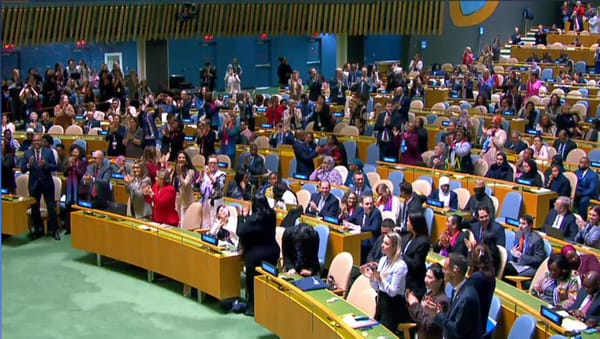
The visit was not only bilateral. At the Canada-Nordic Summit in Oslo, Carney joined leaders from Denmark, Finland, Iceland, Norway, and Sweden in committing to deeper cooperation on Arctic security, defense industrial capacity, resilient infrastructure, trade, technology, and green economic growth. The joint language stressed shared democratic values, the rule of law, NATO deterrence in the Arctic, and the need to guard against dangerous dependencies in a period of geopolitical stress.
That broader Nordic layer matters. It shows Canada is not approaching the Arctic simply as a national defense file or a bilateral issue with Norway. It is positioning itself within a wider northern bloc of allies that increasingly see the Arctic as both a security frontier and an economic zone shaped by infrastructure, climate change, technology, and strategic competition.
The UK stop then extended this same logic westward.
Carney first spoke with Prime Minister Keir Starmer on March 15 and then met him in London on March 16. Their discussions focused on the Middle East, including the humanitarian crisis in Lebanon, as well as Russia’s war against Ukraine. Like the Norway meetings, the UK talks tied regional crises to broader economic and security consequences. Carney and Starmer condemned Iranian missile and drone attacks, including on civilian and energy infrastructure, warned about the risks of regional escalation, and highlighted the impact of conflict on civilians and global energy prices.
At the same time, they reaffirmed Canada and the UK’s steadfast support for Ukraine and discussed how to deepen bilateral defense, trade, and economic cooperation. They also emphasized innovative financing mechanisms to strengthen defense production and supply chains, again including the proposed Defense, Security and Resilience Bank.
So while the Norway leg highlighted Arctic and Nordic cooperation, the UK leg showed that Carney is trying to build the same conversation across the wider Atlantic alliance: security, industrial mobilization, resilient supply chains, and closer coordination among trusted partners.
What ties all of this together is the sense that Canada’s foreign and domestic security agendas are now being fused more openly than before.
Carney’s government is presenting Arctic infrastructure, critical minerals, AI, satellite communications, shipbuilding, supply chains, NATO deterrence, and Ukraine support not as separate files, but as parts of one strategic picture. In that picture, sovereignty is no longer only about borders. It is also about industrial capacity, technological control, infrastructure readiness, alliance credibility, and the ability to act without over-dependence on others.
That is likely why this trip carried so many different elements at once: Norway, Germany, the Nordic summit, the UK, Arctic exercises, space partnerships, AI cooperation, trade, defense finance, and Ukraine. They all fit within a single emerging doctrine — one in which Canada is trying to become more secure, more resilient, more economically strategic, and more tightly aligned with democratic allies in an era of rising global instability.
Bottom line: Carney’s Norway and UK trip was not just a diplomatic tour. It was an attempt to show that Canada’s future security will be shaped in the Arctic, reinforced through NATO and Nordic partnerships, supported by industrial and technological cooperation, and tied directly to how Ottawa responds to crises from Ukraine to the Middle East.
The upcoming ONEST+ Deep Dive (on March 19) will examine NATO’s central role in today’s security architecture — and what the consequences would be if that alliance begins to fracture.
For those following the bigger picture, this is where we go deeper.