Washington has opened a new front in its broader campaign against Latin American drug trafficking networks.
A joint U.S.–Ecuador military operation began yesterday targeting what officials described as “some of the most violent gangs” operating in the Andean country.
Ecuador has increasingly become a key transit hub for cocaine shipments moving from neighboring Colombia toward the United States and Europe. Officials say "the surge in organized crime linked to drug routes has transformed parts of the country into strategic nodes for international trafficking networks".
AFGHANISTAN-PAKISTAN
The United Nations says escalating clashes along the Afghanistan–Pakistan border have killed at least 42 civilians inside Afghanistan between February 26 and March 2.
The UN mission in Afghanistan warned that the violence is worsening the country’s already fragile humanitarian situation and called for an immediate halt to hostilities.
Pakistani authorities also reported casualties on their side of the border, including one civilian death, while security force losses on both sides are estimated to exceed a dozen each.
U.S.-ISRAEL-IRAN
The war involving the United States, Israel, and Iran continues to widen both geographically and strategically, with new developments affecting military operations, diplomacy, and global energy markets.
Turkey said NATO air-defense systems intercepted an Iranian ballistic missile that was heading toward Turkish airspace after crossing Iraq and Syria. The missile was destroyed over the eastern Mediterranean, marking the first time the expanding Iran war has directly involved a NATO member’s airspace.
At sea, Western militaries are increasing their presence. France and the United Kingdom announced plans to deploy warships to the Mediterranean, while the United States unveiled a financial strategy aimed at protecting energy shipping.
President Donald Trump announced that the U.S. Development Finance Corporation will provide maritime trade insurance “at a very reasonable price” to support shipping routes in the Gulf.
Meanwhile, the White House said the administration has begun discussing "what the U.S. role in Iran could look like after the war ends".
Trump said "the campaign is progressing successfully".
U.S. Defense Secretary Pete Hegseth confirmed that American forces sank an Iranian vessel in the Indian Ocean, describing the move as part of Washington’s strategy to dismantle Iran’s naval capabilities and secure energy flows through the Persian Gulf.
Hegseth said:
“Starting last night, and to be completed in a few days... the two most powerful Air Forces in the world will have COMPLETE CONTROL of Iranian skies.
I hope you understand what ‘uncontested airspace’ means — it means we will fly, all day — day and night — finding, fixing, and finishing the missiles and defense industrial base of the Iranian military.”
At the same time, some European leaders have begun openly questioning Washington’s approach to the conflict.
Inside Iran, political maneuvering has reportedly begun over the succession of the country’s supreme leadership. According to sources familiar with internal discussions, the son of Iran’s slain theocratic leader is emerging as a possible successor.
Israel has warned that whoever replaces the leader could become “a target for elimination.”
Trump commented that Iran’s next leader could be “as bad as” the previous one.
Despite U.S. calls for internal revolt — with Trump urging Iranians to “take back” their country over the weekend — there are no signs of a large-scale uprising inside Iran so far.
Military Technology
According to reporting by The Washington Post, the U.S. military relied on its most advanced artificial intelligence tools ever used in combat during recent operations.
To conduct strikes on 1,000 targets in 24 hours, the Pentagon used the Maven Smart System, which integrates AI models including Anthropic’s Claude to assist in identifying targets and generating precise strike coordinates.
Congressional Response
In Washington, Senate Republicans voted down an effort Wednesday that would have forced a halt to the conflict.
The vote signals early political support within Congress for continuing the military campaign, even as the war spreads across the region with no clear U.S. exit strategy defined publicly.
U.S. Operational Plan
Administration officials say the operation against Iran will unfold in multiple phases.
Initial strikes have focused on:
• maritime targets • missile stockpiles
Next stages reportedly include:
• eliminating Iran’s air force and air defenses • dismantling offensive military capabilities • possible operations deeper inside Iran
Trump also acknowledged uncertainty over Iran’s future leadership, warning it would be problematic if the next government were another “hardliner.”
Expanding Front?
Some reports suggest Kurdish fighters have already moved into positions inside western Iran after crossing from Iraq earlier this week, potentially opening a new front in the conflict. However, information remains limited and several sources say preparations for broader operations are still underway.
Israeli outlet i24NEWS reports that thousands of Kurdish fighters in Iraq may be preparing for operations against Iran, with forces reportedly moving toward the border.
CNN previously reported that U.S. officials discussed the possibility of Kurdish forces engaging Iranian positions.
U.S. Diplomatic Response
The U.S. State Department confirmed it is actively assisting American citizens who wish to leave the Middle East.
Trump said evacuation plans were complicated by the speed of events:
“Well, because it happened all very quickly, we thought, I thought maybe more so than most. (...) I thought we were going to have a situation where we were going to be attacked. They were getting ready to attack Israel.”
U.S. Consulate Strike
The U.S. Consulate General in Dubai was struck Tuesday by what officials believe was an Iranian drone, marking another escalation in attacks on diplomatic infrastructure.
Casualties
According to the Associated Press, the death toll inside Iran has reached at least 1,045 people, based on figures from Iran’s Foundation of Martyrs and Veterans Affairs. The agency said the number reflects bodies that have been identified and prepared for burial.
Iranian retaliatory strikes have also caused casualties in Israel. Recent missile attacks have killed at least 8 people and injured dozens, including in a ballistic missile strike on Beit Shemesh earlier this week.
Nuclear Facilities
The International Atomic Energy Agency said it sees no signs of damage to facilities containing nuclear material.
Based on satellite imagery:
• Two buildings near the Isfahan nuclear site were damaged • No additional impact was detected at Natanz • No damage was recorded at Bushehr nuclear power plant
IAEA Director General Rafael Grossi again urged restraint:
maximum restraint is necessary to avoid any risk of a radiological incident.
Strait of Hormuz Crisis
French President Emmanuel Macron warned that the conflict is disrupting global trade routes.
He said:
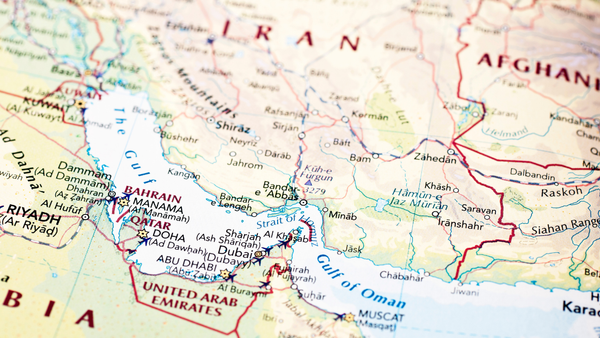
“The situation of international trade is deeply disturbed by this war. Today the Strait of Hormuz is actually closed. And it is through this strait where about 20% of the world's oil and liquefied natural gas passes. The Suez Canal and the Red Sea are also under tension and threatened.”
Macron announced plans to build an international coalition to protect shipping routes.
Trump, meanwhile, proposed a different approach: using the U.S. government as a financial guarantor for shipping insurance.
Under the plan, the Development Finance Corporation would provide political risk insurance for vessels transiting the Gulf, potentially backed by U.S. Navy escorts.
Companies would pay premiums to Washington, effectively turning the U.S. government into a backstop for global energy shipping risk.
ONEST Take
The disruption around the Strait of Hormuz demonstrates how modern conflicts affect global trade not only through direct military action but also through financial systems.
As risks rise, insurers are reassessing coverage for ships operating in the Gulf, pushing premiums sharply higher and prompting some companies to suspend operations.
The U.S. proposal to offer government-backed insurance could stabilize shipping flows if private coverage disappears. Whether that strategy works will depend on security conditions in the region and how global insurers respond.
Shipping Disruptions
Shipping giant Maersk announced it is suspending most cargo bookings in and out of:
• UAE • Oman • Iraq • Kuwait • Qatar • Bahrain • Saudi Arabia
until further notice.
Meanwhile, the UK Maritime Trade Operations agency reported that a tanker near Kuwait was struck by a “large explosion,” triggering an oil spill.
Qatar
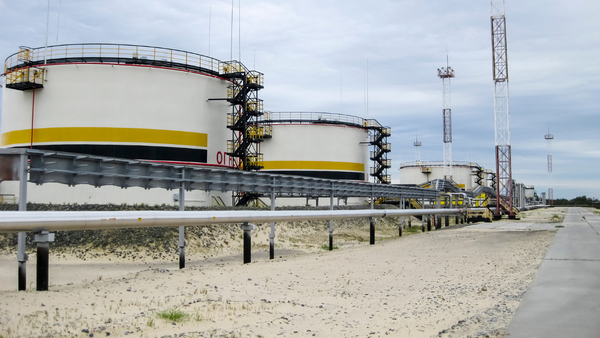
QatarEnergy has declared force majeure, halting LNG liquefaction. A full restart after a complete shutdown could take about two weeks, followed by additional time to return to full capacity.
Qatar is the second-largest LNG exporter in the world, meaning any prolonged shutdown could send shockwaves through global energy markets.
The situation now connects several broader trends:
• Europe’s energy transition • Russia’s leverage over energy markets • rising global inflation pressures
Reports indicate the United States will grant an open-ended sanctions exemption to the German subsidiaries of Russian oil giant Rosneft.
The waiver would allow Rosneft Deutschland and RN Refining & Marketing to continue operating refineries currently under German government trusteeship.
Berlin placed those assets under federal control in 2022 after seeking to separate them from the Russian parent company.
Germany’s economy ministry said Washington issued a “Letter of Comfort” confirming the subsidiaries are considered operationally independent from Rosneft.
The exemption secures operations at several key refineries, including PCK Schwedt, which supplies roughly 90% of fuel for Berlin and Brandenburg and accounts for about 12% of Germany’s fuel supply.
ONEST Take
The decision illustrates the structural tension between sanctions policy and energy security.
Despite efforts to reduce reliance on Russian energy after 2022, parts of Europe’s refining infrastructure remain tied to assets originally built by Russian companies.
Maintaining stable fuel supplies has required regulatory flexibility allowing those facilities to continue operating under European management.
As Middle East instability tightens global energy markets, geopolitical supply shocks may once again reshape energy flows — a dynamic that could ultimately benefit Russian exports.
UNITED KINGDOM
The British Defence Ministry said a drone targeting the RAF Akrotiri base in Cyprus was not launched from Iran, though officials did not specify the origin.
The base hosts both military installations and families of personnel.
The incident occurred shortly after Britain said it would assist the United States in the war against Iran.
Cyprus later suggested the drones may have originated in Lebanon, though the responsible group remains unclear.
Britain has since reinforced regional defenses, deploying additional air defense systems and preparing to send Royal Navy helicopters armed with missiles.
HUMANITARIAN IMPACT
UNICEF reported devastating consequences for children in Lebanon in just 24 hours:
• 7 children killed • 38 children injured • nearly 18,000 children displaced
The agency said:
Children are paying the price of escalating violence. No child should lose their life. No child should carry the scars of war. International humanitarian law is not optional. Children must be protected.
GLOBAL RESPONSE
Governments around the world are reacting differently to the conflict.
China’s foreign minister Wang Yi told Israel that Beijing opposes military strikes against Iran and warned the use of force will only create “grave repercussions.”
Italian Prime Minister Giorgia Meloni said the crisis reflects a broader collapse in international law following Russia’s invasion of Ukraine.
Vatican Secretary of State Cardinal Parolin warned that recognizing a unilateral right to “preventive war” could ignite global instability.
Former U.S. President Barack Obama also expressed concern:
“I am deeply concerned that we have abandoned the diplomacy and international consensus that we worked so hard to build a decade ago.
My thoughts today are with those who have been sent back to the front lines, and with the innocent Iranian civilians.
The people of Iran deserve freedom and dignity, but true sovereignty arises from the will of a people, not from the rubble of a destroyed national infrastructure.”
Canada’s Prime Minister Mark Carney said his support for U.S. military action came “with regret,” calling the war another example of the failure of the international system.
EUROPEAN DIVISIONS
Spain strongly criticized the U.S.-Israeli strikes and barred Washington from using Spanish military bases.
Trump responded by threatening to suspend trade with Spain.
Spain’s Prime Minister Pedro Sánchez said:
The world, Europe, and Spain have faced this critical moment before. In 2003, a few irresponsible leaders dragged us into an illegal war in the Middle East that brought nothing but insecurity and pain.
Our response then must be our response now: NO to violations of international law. NO to the illusion that we can solve the world's problems with bombs. NO to repeating the mistakes of the past. NO TO WAR.
The European Union said it stands “in full solidarity” with Spain.
FRANCE
Macron urged Hezbollah to stop attacks against Israel and called on Israel to respect Lebanon’s territorial integrity while avoiding a ground invasion.
France also announced humanitarian assistance for displaced civilians in southern Lebanon.
Separately, Macron unveiled a new nuclear doctrine of “advanced deterrence,” signaling that France could expand its nuclear arsenal and possibly deploy weapons to allied European states.
He said:
“To be free, one must be feared.”
France has also redeployed its nuclear-powered aircraft carrier from the Baltic Sea to the Mediterranean.
Meanwhile, several security analysts warn that Russia may view the widening Middle East conflict as a strategic distraction that could create an “opening” for additional pressure along NATO’s eastern flank, particularly in the Baltic region. Some experts also link Russia’s recent restrictions on social media platforms, including Telegram, to possible preparations for a new wave of conscription, suggesting the Kremlin may be tightening domestic information control ahead of potential military mobilization.
EUROPEAN SECURITY
EU foreign policy chief Kaja Kallas warned that the Middle East war is widening rapidly and threatens European security.
She said Europe must not allow the conflict to distract from Russia’s ongoing war in Ukraine and reiterated support for Ukraine’s EU accession.
The EU has agreed to provide Ukraine with a €90 billion loan package and continues to prepare additional sanctions against Russia.
UKRAINE
President Volodymyr Zelenskyy said Ukraine may assist Middle Eastern partners with expertise in intercepting Iranian-made Shahed drones.
He emphasized such support would only occur if it does not weaken Ukraine’s own defenses.
Ukraine has also reportedly conducted a drone strike on Russian naval vessels in Novorossiysk, damaging multiple ships.
CHINA
China is developing submarines capable of targeting the United States from waters closer to the Chinese mainland, according to testimony by the head of U.S. naval intelligence.
Currently, Chinese ballistic-missile submarines must deploy near the island chain including Japan, Taiwan, and the Philippines to reach U.S. territory.
SOUTH KOREA
South Korea’s stock market experienced its largest single-day drop in history, falling 12%.
The sell-off reflects fears that the Iran war could disrupt global energy supplies. South Korea is the world’s eighth-largest energy importer.
GLOBAL ECONOMY
Canada is promoting a critical minerals buyers’ alliance to reduce global supply concentration.
Earlier this week, Ottawa signed agreements worth $9.2 billion in potential mining investments across twelve countries.
Canada also reached a $1.9 billion uranium supply agreement with India, covering shipments between 2027 and 2035.
UNITED NATIONS
Burundi has nominated former Senegalese president Macky Sall as a candidate for the next UN Secretary-General.
Other declared candidates include:
• Michelle Bachelet • Rafael Grossi • Rebeca Grynspan
The selection process is expected to begin in July.
HUMANITY
And finally — a lighter moment.
A video from the Falkland Islands shows penguins encountering a cat for the first time, capturing a rare and curious interaction between species that rarely meet.
0:00
/0:45
Sometimes even in the middle of global crises, the natural world reminds us how much wonder still exists.
Thank you for taking the time to follow the news with depth, context, and curiosity.
Olga Nesterova is a journalist and founder of ONEST Network, a reader-supported platform covering U.S. and global affairs. A former White House correspondent and UN diplomat, she focuses on international security and geopolitical strategy.