MARCH 30: Iran Signals Clash, Gulf Pressure Builds, NATO Tensions Rise

– 14 min read


“If NATO is just about us defending Europe if they’re attacked, but them denying us basing rights when we need them, then that’s not a very good arrangement.” — Marco Rubio
The gap between U.S. and Iranian messaging widened further on Monday after reports suggested Tehran had agreed to parts of a U.S. “15-point plan.” Publicly, Washington is signaling momentum and possible concessions. Tehran is saying the opposite: that no agreement has been reached and that the proposal contains “excessive, unrealistic, and irrational demands.” That discrepancy matters. If Iran had accepted terms involving nuclear rollback, missile restrictions, and changes to its regional posture, the shift would likely be visible well beyond diplomatic leaks.
At the same time, regional pressure on Washington is moving in only one direction: toward escalation. Gulf allies, particularly Saudi Arabia and the United Arab Emirates, are reportedly urging President Donald Trump to keep going, arguing Iran has not yet been weakened enough by the month-long U.S.-led campaign.
The strain is also beginning to show inside the Western alliance. Trump and senior officials are increasingly criticizing NATO allies for not backing U.S. operations in the Middle East, even as the alliance itself continues to respond to direct threats, including another successful interception Monday of an Iranian ballistic missile headed toward Türkiye.
Claims circulated Monday that Iran had accepted elements of a U.S. “15-point plan,” but public messaging from the two sides remains fundamentally at odds.
The U.S. is projecting that negotiations may be gaining traction. Iran is projecting continued resistance and no deal.
That matters because the substance reportedly under discussion is not minor. The plan would require sweeping Iranian concessions, including nuclear rollback, restrictions on ballistic missiles, and broader regional changes. If Tehran had truly agreed to terms of that scale, the shift would almost certainly be visible in a much more concrete way.
Pakistan’s diplomacy over the weekend underscored the urgency around possible talks. After meeting with senior officials from Egypt, Saudi Arabia, and Turkey, Pakistan’s foreign minister said Islamabad is prepared to host U.S.-Iran negotiations. Neither side has confirmed a date. Iran’s foreign ministry, meanwhile, said Monday that the reported U.S. peace proposal includes “excessive, unrealistic, and irrational demands.”
Recent reporting also suggests Iran wants guarantees from China and Russia before moving toward ceasefire talks with Washington, apparently concerned that any current proposal could amount to a deception tactic rather than a durable pathway to de-escalation.
Pakistan has offered to host negotiations, and China has backed that effort while publicly emphasizing de-escalation.
President Trump is now scheduled to travel to Beijing on May 14–15 for a high-stakes summit with Xi Jinping after the trip was postponed because of the conflict. If that meeting produces movement, Xi could emerge as a central international mediator in whatever comes next.
The regional battlefield expanded further over the weekend.
In addition to the Houthi missile launch, Iran struck aluminum plants in Bahrain and the United Arab Emirates and also attacked a U.S. airbase in Saudi Arabia. According to multiple outlets citing unnamed U.S. officials, the Saudi strike wounded twelve U.S. troops and damaged several aircraft.
At the same time, U.S.-Israeli strikes hit a uranium processing facility and universities in Tehran and Isfahan, according to Iranian state media.
In Lebanon, a UN peacekeeper and three Lebanese journalists were killed over the weekend amid fighting between Israel and Hezbollah.
A New York Times investigation also reported that the United States used at least one missile not previously tested in combat in a deadly strike that hit Iranian civilian sites, including a sports center and a school. Some of those sites were located near a military compound.
According to AP reporting, Gulf allies led by Saudi Arabia and the UAE are privately pressing Trump to continue military operations against Iran, arguing that Tehran has not yet been weakened enough by the month-long U.S.-led campaign.
That is a notable shift from the early days of the war, when several Gulf governments complained they had not been properly warned in advance and cautioned that the conflict could destabilize the entire region.
Now, some are reportedly framing the current moment as a rare strategic opening to seriously degrade — or even transform — Iran’s leadership and capabilities.
Officials from Saudi Arabia, the UAE, Kuwait, and Bahrain have reportedly conveyed that they do not support ending the campaign without either meaningful changes in Iran’s leadership or a fundamental shift in Iranian behavior.
Saudi Arabia, in particular, has reportedly outlined several conditions for an acceptable outcome: neutralizing Iran’s nuclear program, dismantling its ballistic missile capabilities, ending support for regional proxy groups, and ensuring that the Strait of Hormuz cannot be disrupted.
Meeting goals like those would require either a major change in Tehran’s strategic posture — or a change in leadership altogether.
Support for escalation is not uniform.
Saudi Arabia and the UAE are leading the push for sustained pressure. The UAE has taken the more hawkish line, with some officials reportedly advocating for a ground operation. Kuwait and Bahrain appear broadly aligned with that direction.
Oman and Qatar, by contrast, continue to favor diplomacy and de-escalation, preserving their traditional role as intermediaries.
Even as Gulf states support Washington’s harder line, they have not entered direct offensive operations.
They continue to host U.S. forces and provide strategic basing, but they are staying outside the fighting itself. The reasons are practical as well as political: the risk of operational mistakes, sensitivities tied to limited diplomatic ties with Israel, and the vulnerability of critical infrastructure to Iranian retaliation.
Iran has explicitly warned it could target regional infrastructure — including energy facilities and desalination plants — if escalation continues.
That is the central balance Gulf states are now trying to manage: support continued pressure on Iran, but avoid becoming direct participants in the war.
Read more: If Saudi Arabia and the UAE Enter the War Against Iran: What Comes Next for the Middle East
This regional pressure comes as Trump’s own messaging continues to shift. At times he suggests Iran is prepared to negotiate. At other moments he threatens deeper escalation.
The administration is also struggling to build consistent domestic backing for a conflict that has already left more than 3,000 people dead across the region and rattled global markets.
At the same time, Trump has increasingly emphasized alignment with Gulf partners, publicly portraying them as “fighting back” alongside the United States.
According to The Washington Post, the Pentagon is planning for possible ground operations in Iran that could last weeks — or even a couple of months.
The scenarios reportedly under discussion include raids by Special Operations forces and conventional troops, including operations focused on Kharg Island and areas near the Strait of Hormuz aimed at eliminating weapons threatening shipping lanes.
The USS Tripoli Amphibious Ready Group has now arrived in the U.S. Central Command area. Roughly 3,500 sailors and Marines from the 31st Marine Expeditionary Unit are in the region, along with strike fighters, transport aircraft, and amphibious assault assets.
NATO said Monday that it again successfully intercepted an Iranian ballistic missile headed toward Türkiye.
“NATO is prepared for such threats and will always do what is necessary to defend all Allies.”
That statement is significant not only militarily, but politically: even as Washington criticizes parts of the alliance over the Middle East, NATO is continuing to respond when allied territory is directly threatened.
The United Nations condemned two consecutive days of deadly attacks on peacekeepers serving with UNIFIL amid rising hostilities between Israeli forces and Hezbollah.
Spanish Prime Minister Pedro Sánchez said: “In the early hours of yesterday, a new red line was crossed in Lebanon. A UN blue helmet was killed in this attack, and three others were injured. Spain strongly condemns these events. It demands that the origin of the projectile be clarified. And it calls on the Israeli government to halt the hostilities. Attacks on UN peacekeeping missions are an unjustifiable aggression against the entire international community. We also extend our sincere condolences to the family of the fallen soldier and to all UNIFIL personnel.”
Canada also condemned the killing of three UNIFIL peacekeepers, calling it a grave violation of international law and stating that all parties must respect the safety and security of UN personnel and fully comply with UNSCR 1701.
A U.S. Air Force E-3 Sentry (AWACS) command-and-control aircraft was among the aircraft damaged in the March 27 Iranian missile and drone attack on Prince Sultan Air Base in Saudi Arabia.
More than 10 service members were injured, including two seriously. Aerial refueling tankers were also reportedly damaged.
Politico reported that Ukrainian President Volodymyr Zelenskyy accused Moscow of helping Tehran target U.S. military assets in the Middle East, including by providing satellite imagery ahead of the Iranian strike on the Saudi base.
Israel’s parliament approved the death penalty for Palestinians convicted of murdering Israelis, handing a major political victory to the country’s far-right factions, which have strongly pushed for the measure.
According to AP, Prime Minister Benjamin Netanyahu went to the chamber in person to vote yes.
Italy’s foreign minister Antonio Tajani said: “For the first time, the Israeli police denied the leaders of the Catholic Church the possibility of celebrating Palm Sunday Mass in one of the holiest places for millions of believers around the world [in Jerusalem].”
Israel said the restriction was based on security concerns, but the issue centered on allowing just four people in rather than a large crowd. Netanyahu later promised the priests would be allowed in, but for many Christians the core issue was that Palm Sunday itself had already passed without the holy day being honored in the way it should have been.
Italian Prime Minister Giorgia Meloni said: “Preventing the Patriarch of Jerusalem and the Custodian of the Holy Land from entering, especially on a solemnity as central to the faith as Palm Sunday, constitutes an offense not only to believers, but to every community that recognizes religious freedom”
Meanwhile, Pope Leo XIV delivered a pointed message on Sunday, saying that God rejects prayers of leaders who wage wars.
Asian countries are burning more coal as Middle Eastern gas supplies tighten, with warnings that a complete cutoff could happen soon.
Egypt announced it will slow large state projects with heavy fuel and diesel usage for at least two months, while also cutting fuel allocations for government vehicles by 30%, according to Prime Minister Mostafa Madbouly.
Yemen: Israel said it intercepted a missile launched from Yemen toward Israel early Saturday — the first such fire from that front in this phase of fighting. The Iran-backed Houthis claimed responsibility, raising renewed concerns that the group could resume attacks on commercial shipping in the Red Sea corridor.
Kuwait: Kuwait International Airport was hit by multiple drone attacks Saturday, damaging its radar system but causing no casualties, according to state media citing the Civil Aviation Authority.
Oman: Maersk temporarily suspended operations at the Port of Salalah after a security incident early Saturday. S&P Global Ratings said Oman’s fiscal position and strategic location should help it withstand the regional conflict, while Muscat’s foreign ministry condemned attacks on its territory and said authorities were investigating their “sources and motives.”
Saudi Arabia: The number of American service members wounded in the Iran war has now reportedly climbed above 300, including more than two dozen injured this week in attacks on a Saudi air base. Saudi Crown Prince Mohammed bin Salman also held phone talks Saturday with India’s Prime Minister Narendra Modi on the regional escalation.
UAE: Ukraine agreed Saturday to cooperate on defense with the UAE and Qatar as President Zelenskyy traveled through the region to promote anti-drone technology. In Abu Dhabi, six people were injured after three fires broke out due to debris falling from a ballistic missile interception.
Iraq: A drone strike targeted the home of the president of Iraq’s Kurdistan Region early Saturday, according to security sources, as tensions continue rising across northern Iraq.
Lebanon: An Israeli strike in southern Lebanon killed three journalists on Saturday who were covering the latest Israel-Hezbollah war, according to their TV stations.
Fears are intensifying for civilians trapped in Sudan’s war between rival military forces as attacks grow deadlier and humanitarian access continues to contract.
The latest alarm follows a deadly airstrike on a funeral gathering in West Kordofan.
In Gaza, the Israeli military killed three Palestinian men on Saturday in two separate airstrikes, according to local health officials and medics.
The deaths are the latest violence despite a U.S.-brokered ceasefire that is now more than five months old.
Secretary of State Marco Rubio signaled growing frustration with NATO’s limits in relation to U.S. operations in the Middle East.
“If NATO is just about us defending Europe if they’re attacked, but them denying us basing rights when we need them, then that’s not a very good arrangement. That’s a hard one to stay engaged in and say this is good for the United States.”
He added that the issue will have to be “re-examined.”
Trump has repeatedly described NATO as a “paper tiger” after allies declined to support his Middle East campaign. That criticism cuts directly against the alliance’s actual structure: NATO is a collective defense arrangement, not a mechanism for backing offensive wars.
Trump is also reportedly considering tying NATO’s Article 5 protections to defense spending. Under the proposal, allies failing to meet a 5% of GDP threshold could lose access to collective defense guarantees.
No country currently meets that threshold.
In NATO terms, the 5% concept would break down into roughly:
Trump is also said to be considering a troop withdrawal from Germany.
Watch more on that in our deep dive.
Canadian Foreign Minister Anita Anand visited Saudi Arabia to reaffirm Canada’s support for Gulf partners facing retaliatory attacks from Iran.
She met with her counterpart, Prince Faisal bin Farhan, to discuss strengthening long-term bilateral economic ties.
Bahrain will hold the presidency of the UN Security Council this April, with regional stability and maritime security at the center of its agenda.
Its priorities include:
A longstanding global moratorium on taxing digital downloads and streaming has now expired after WTO delegates failed to reach a deal extending it.
A dispute between the United States and Brazil reportedly derailed the agreement late Sunday. A draft plan to reform how the WTO addresses unfair trade subsidies also failed to pass after meetings ended acrimoniously.
AP reported that most TSA officers received backpay on Monday covering at least two missed paychecks, according to an agency statement.
Members of the Castro family are emerging as potential power brokers as the Trump administration presses for changes in Cuba.
The astronaut whose medical episode triggered an emergency return to Earth in January said doctors still do not know what caused it.
Trump also released a video of a new mockup for a Miami-based book-less library and museum complex that resembles the Freedom Tower. The concept places the current Air Force One on the ground floor, with escalators wrapping around it and leading to a mock Oval Office, golden ballroom and an auditorium featuring a large gold statue of Donald J. Trump.
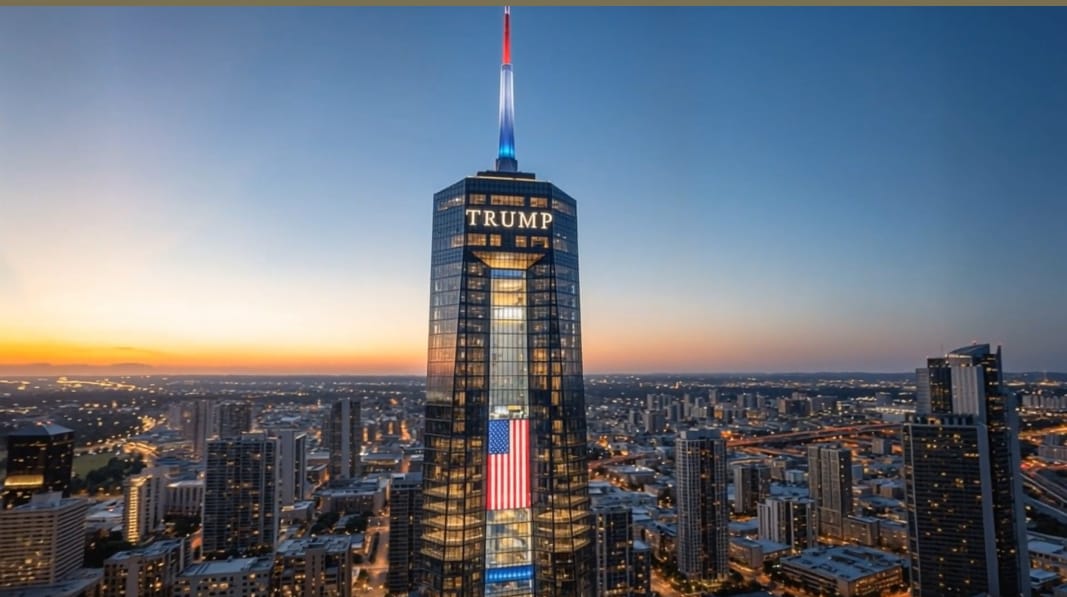
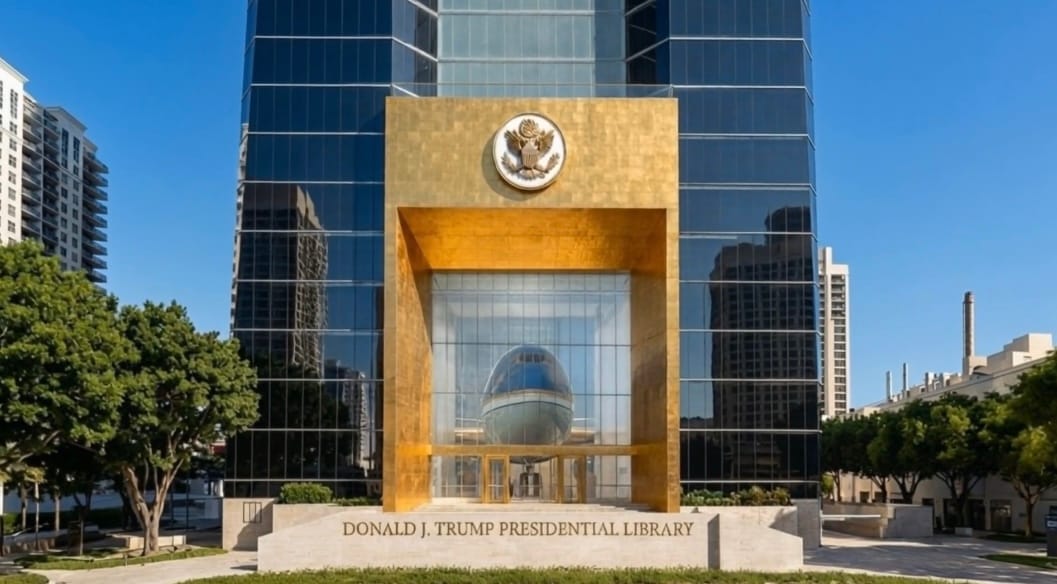
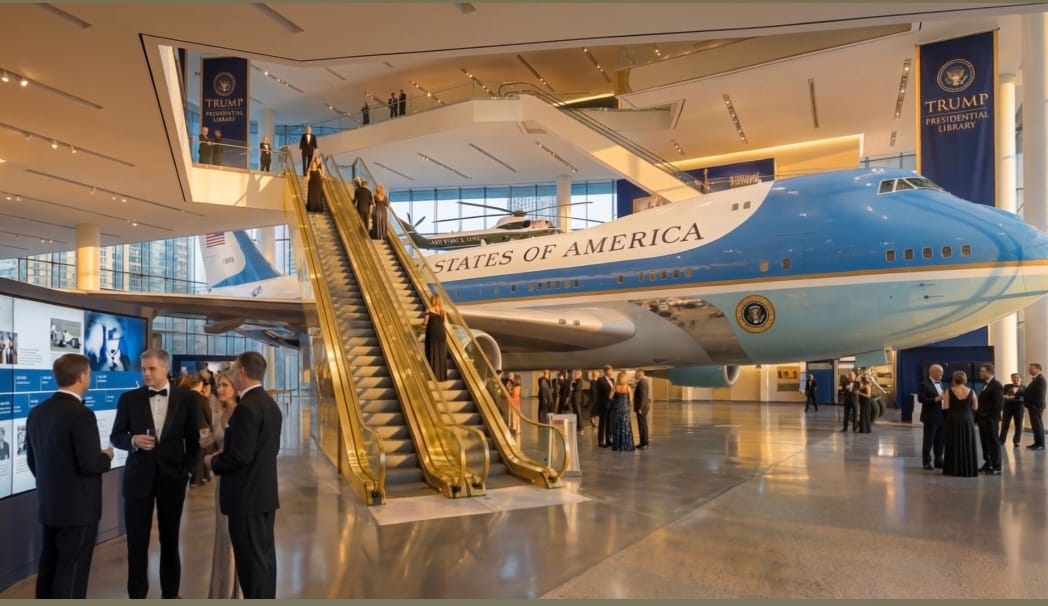


You can watch the video on trumplibrary.org
Critics say the Washington D.C. ballroom design still appears to have major structural and aesthetic issues, including staircases that lead nowhere and columns that would obstruct interior views. Trump said the ballroom would also serve as a “shed” for the military complex below.
The number of deaths in ICE custody is also rising.
EU foreign policy chief Kaja Kallas will travel to Ukraine on March 31 alongside EU foreign ministers.
The delegation will visit Bucha to mark four years since Russia’s mass killings there. Kallas will also host an informal Foreign Affairs Council meeting, hold a press conference with Ukrainian Foreign Minister Andrii Sybiha, and take part in a handover ceremony of energy equipment to Ukrainian Railways.
The BBC reported that Zelenskyy said allies had asked him to reduce attacks on Russian energy infrastructure.
Zelenskyy also said he negotiated air defense agreements with Qatar, Saudi Arabia, and the UAE during a regional trip focused in part on Ukrainian anti-drone technology.
Secretary of State Marco Rubio spoke Monday with Georgian Prime Minister Irakli Kobakhidze.
According to the U.S. readout, the two discussed mutual interests including security in the Caucasus and the Black Sea region.
The United States is allowing a Russian oil tanker to reach Cuba, delivering a critical energy supply.
At the same time, a visiting Russian delegation of sanctioned lawmakers — who were received and toured through Capitol Hill by some GOP lawmakers — said their talks with U.S. counterparts covered:
Nepal’s former prime minister and former home minister were arrested in police raids Saturday as part of an investigation into their alleged roles in last year’s crackdown on protesters, which killed dozens.
Both men deny responsibility for the police use of force.
The arrests came one day after Nepal swore in a new prime minister who rose to prominence during those demonstrations.
China announced two new probes into U.S. trade practices on Friday following the Supreme Court’s reversal of Trump’s emergency tariffs.
One of the probes broadly examines possible unfair U.S. trade practices. The second focuses specifically on restrictions affecting green products.
The move mirrors similar U.S. investigative tools directed at China and comes just ahead of Trump’s planned visit.
A bipartisan U.S. Senate delegation arrived in Taipei on Saturday to build support for a $40 billion defense bill that has stalled amid opposition resistance inside Taiwan.
The trip is the first such Senate visit since last summer. After Taiwan, the delegation is expected to continue to South Korea and Hawaii.
In Spain, a hospital is bringing bedridden patients to the beach in an effort to lift their spirits and ease stress.
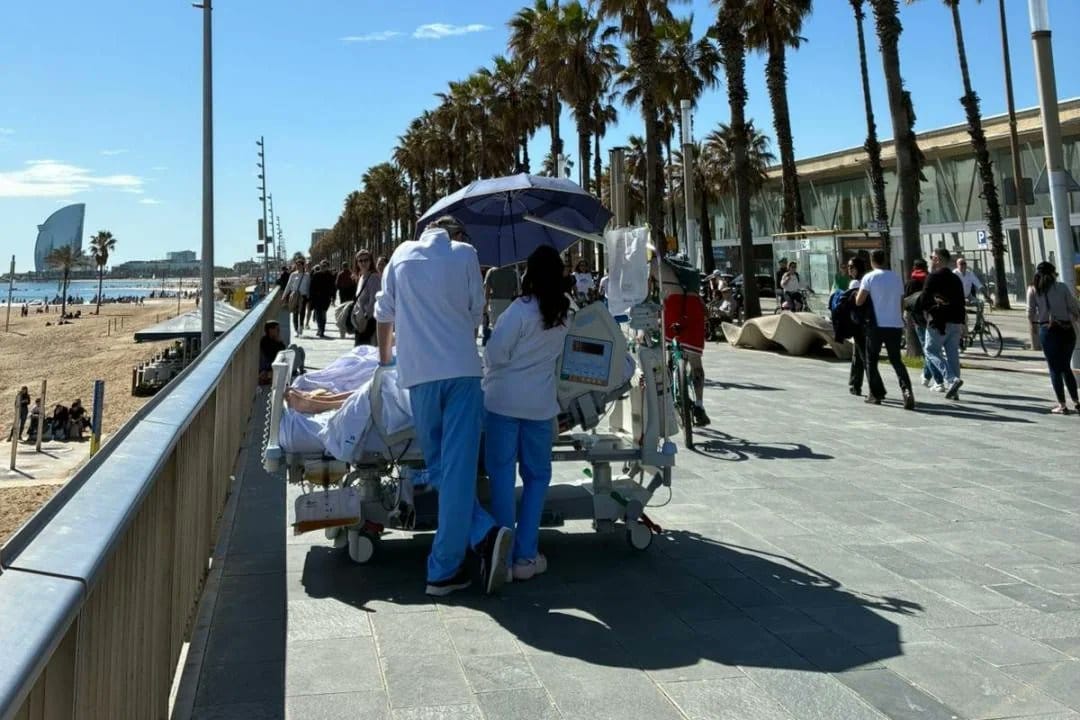


Pictures by JM News Network