MARCH 27: Iran war escalates as U.S. weighs troop deployment, Ukraine support under pressure

– 9 min read

“They have to open up the Strait of Trump– I mean, Hormuz. Excuse me. Such a terrible mistake. The fake news will say, 'He accidentally said..' No. There's no accidents from me.” — Donald Trump
Nearly a month into the war, the pace of military activity has not slowed — despite repeated U.S. and Israeli strikes on Iranian missile infrastructure.
Instead, Iran has adapted.
Military analysts and former U.S. officials say Tehran has shifted launch operations deeper into its territory, relying on longer-range systems after early strikes degraded launch sites near the Persian Gulf.
The result:
Missiles continue to fly — even as launch sites are repeatedly targeted.
At the same time, Washington is preparing for a possible escalation.
According to a senior U.S. defense official, the White House and Pentagon are actively considering deploying at least 10,000 additional combat troops to the region in the coming days.
If approved, the move would significantly expand the U.S. military footprint — and signal that a ground operation is no longer a distant scenario, but an option under active preparation.
Additional indicators reinforce that shift:
Diplomatically, positions remain far apart.
Iran has told intermediaries it will not agree to a ceasefire unless Lebanon is included — effectively linking the war to Hezbollah and expanding its scope.
A senior Iranian official also warned that “Iran’s enemies” may be preparing to occupy an island — signaling growing concern about territorial escalation.
Meanwhile, maritime security remains unresolved.
France has already convened consultations with dozens of countries on how to protect shipping routes once hostilities end, while a French naval officer warned that threats to the Strait of Hormuz are likely to persist even after de-escalation.
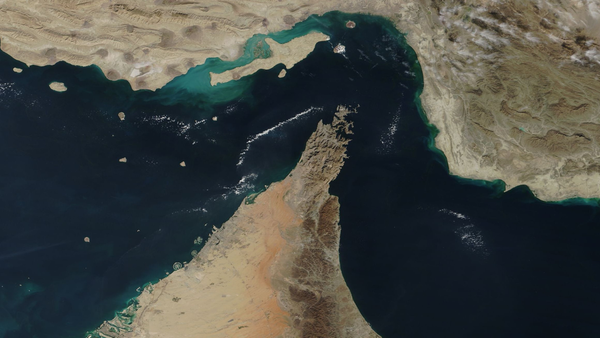
The Strait of Hormuz remains the central pressure point.
While some oil tankers have passed through, the situation remains unstable — with Iran controlling access conditions and signaling it may continue to do so even after the conflict.
The economic impact is already materializing:
President Trump has extended his deadline for Iran to reopen the Strait to April 6, delaying potential strikes on Iranian energy infrastructure.
The decision follows market volatility, including a sharp stock market drop linked to war escalation fears.
At the same time, global institutions are adjusting forecasts:
“A prolonged period of higher energy prices will add markedly to business costs and raise consumer price inflation,” the OECD warned.
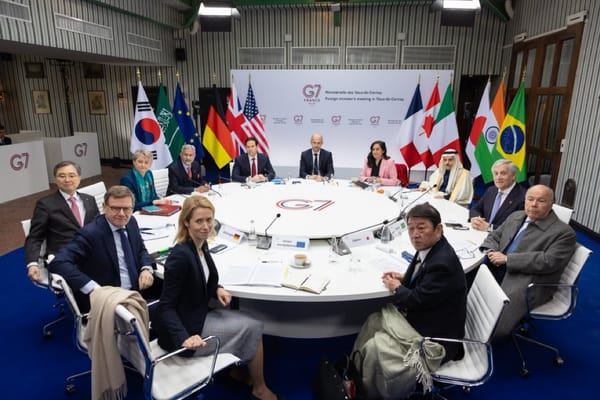
The war is exposing clear differences in how global actors are responding.
NATO Secretary General Mark Rutte publicly backed Washington’s actions, stating that President Trump is acting to make “the whole world safer.”
At the same time, U.S. officials are calling on allies to contribute to reopening the Strait of Hormuz — a request that has not been uniformly embraced.
European priorities are increasingly split:
Beijing is pursuing a different strategy.
China is relying on direct diplomacy with Iran to secure safe passage for its vessels.
Chinese shipping has already resumed through the region under Iran’s proposed “non-hostile” corridor — highlighting Beijing’s preference for economic leverage over military involvement.
A significant shift is emerging in Western support for Ukraine.
According to multiple officials familiar with discussions, the United States has warned allies that weapons deliveries — particularly air defense systems — may be disrupted as resources are redirected to the Middle East.
This includes:
This is not traditional “aid,” but allied-funded equipment — raising complex legal and political questions about how it can be reassigned.
At the same time, Ukraine continues to demonstrate operational effectiveness.
Ukrainian interceptor drones reportedly destroyed more than 10,000 Russian drones in a single month, including Shahed models — a record pace.
Symbolically, support remains visible.
During a meeting with Ukrainian First Lady Olena Zelenska, former U.S. President George W. Bush stated:
“We want the people of Ukraine to know that we continue to stand with America’s ally, Ukraine.”
The conflict is increasingly spilling across the region.
Meanwhile, humanitarian pressure is mounting.
Aid organizations warn they are struggling to respond after steep U.S. funding cuts — just as demand surges due to the war.
In Sudan, the situation is already critical:
More than 2 million people in Darfur have lost access to medical care after a major hospital was destroyed in a drone strike.
Domestically, pressure is building on multiple fronts.
The Senate unanimously voted in a rare overnight session to fund most of the Department of Homeland Security — including the TSA — after a standoff that left workers unpaid and disrupted airport operations nationwide. However, House Republicans rejected the Senate deal, leaving the shutdown in place and key agencies without full funding.
As the impasse continues, President Trump signed an executive order directing the Department of Homeland Security to begin paying TSA workers — effectively bypassing the congressional funding standoff to keep airport security operations functioning.
At the same time, the administration is continuing to advance policy changes through executive and regulatory tools.
A new executive order ties federal contracts to the elimination of DEI programs, requiring companies seeking government business to comply or risk losing access. The policy reframes DEI as discriminatory rather than inclusion-based.
The administration is also expanding its pressure campaign on higher education, launching investigations into the admissions policies of three major medical schools.
Separately, Treasury announced that President Trump’s signature will appear on future U.S. paper currency alongside the Treasury secretary’s — a first for a sitting president.
Security incidents are adding to the atmosphere.
The FBI charged two individuals in connection with an improvised explosive device found near MacDill Air Force Base in Florida. In a separate development, video shows a U.S. Navy F/A-18 narrowly avoiding a strike from an Iranian man-portable air defense system during an operation in the region.
12 U.S. troops were injured in attack on Saudi base, marking one of the most serious breaches of American air defenses during the war.
Public response is also building. More than 3,100 demonstrations are expected across all 50 states this weekend, driven by concerns over the war, economic pressure, and administration policies.
Canada is accelerating both its defense posture and economic strategy in response to the evolving global environment.
Prime Minister Mark Carney confirmed that Canada has now reached its 2% NATO defense spending target, signaling a shift toward long-term military investment and alliance alignment.
At the same time, Ottawa expanded sanctions targeting Russia’s so-called “shadow fleet” — vessels used to bypass sanctions and transport oil — adding 100 more ships to its restrictions list. The move is aimed at cutting off revenue streams that continue to fund Russia’s war effort.
Canada also imposed new sanctions on Iranian entities tied to weapons production networks, reinforcing its position against Tehran’s military exports.
Domestically, Canada and Nova Scotia signed a new “one project, one review” agreement designed to accelerate approvals for major infrastructure and energy projects while maintaining environmental protections and Indigenous consultation — an effort to attract investment and speed up development timelines.
In Israel, legal authorities are raising serious questions about whether Prime Minister Benjamin Netanyahu can be granted a presidential pardon while his criminal trial is still ongoing.
The Ministry of Justice’s pardons department stated it cannot determine that the president has the authority to issue such a pardon before conviction, and stopped short of recommending the move.
Legal experts reviewing the case emphasized that there is no clear precedent for a pre-conviction pardon under these circumstances, and warned that granting one could undermine the principle of equality before the law and erode public trust in state institutions.
Hong Kong has introduced a new legal provision that makes it a criminal offense to refuse to provide passwords or assist police in accessing electronic devices.
The rule applies broadly — including to travelers, transit passengers, and foreign nationals — and covers phones, laptops, and other personal devices.
The measure significantly expands enforcement powers and raises concerns about privacy, legal protections, and the treatment of international travelers passing through Hong Kong.
The long-anticipated meeting between President Donald Trump and President Xi Jinping has been rescheduled for May 14–15 in Beijing, after being delayed due to the Iran war.
The summit is expected to focus heavily on trade tensions and the broader geopolitical fallout of the conflict in the Middle East.
The timing is notable: the meeting will be the first presidential visit to China in years and comes as Washington’s leverage on trade has been weakened following a U.S. Supreme Court ruling that invalidated key tariff authorities.
The war in Iran is also expected to shape discussions, given China’s heavy reliance on Iranian oil and its efforts to position itself as a stabilizing diplomatic actor rather than a military participant.
South Korea is moving to contain the economic impact of rising energy prices tied to the Iran war.
The government announced plans for a $17 billion supplemental budget, aimed at supporting both businesses and households facing higher fuel costs.
Additional measures include tightening fuel price caps and encouraging conservation, reflecting growing concern about prolonged energy disruption and its impact on the broader economy.
Nepal has sworn in a new prime minister following a major political shift driven by youth-led protests.
Balendra Shah, a 35-year-old engineer and former rapper who rose to national prominence during last year’s demonstrations, secured a decisive electoral victory, with his party winning nearly two-thirds of seats in parliament.
His rise reflects a broader rejection of traditional political elites and signals a generational shift in leadership — with expectations now focused on governance reform and delivery after a campaign built on anti-establishment momentum.
Wall Street bonuses tied to 2025 performance reached a record $49.2 billion, with the average payout rising to $246,900.
At the same time, scrutiny is growing around financial flows linked to Iran. Investigators identified $1.7 billion moving through accounts on the world’s largest crypto exchange tied to Iranian entities, raising concerns about sanctions enforcement.
In financial policy, Fannie Mae will now accept mortgages backed by cryptocurrency, signaling a deeper integration of digital assets into traditional lending systems.
In tech, companies are adjusting under pressure. OpenAI has shelved a planned product indefinitely following investor concerns, while Netflix is raising subscription prices again — its second increase in a year — as platforms continue to push toward profitability.
Meanwhile, a federal court dismissed X’s lawsuit against advertisers, removing a key legal challenge as the company faces ongoing advertiser pressure.
Two rescue dogs from Tennessee have found a new home with President Joe Biden and Dr. Jill Biden — a reminder that even in a week defined by escalation, some stories still move in a different direction.
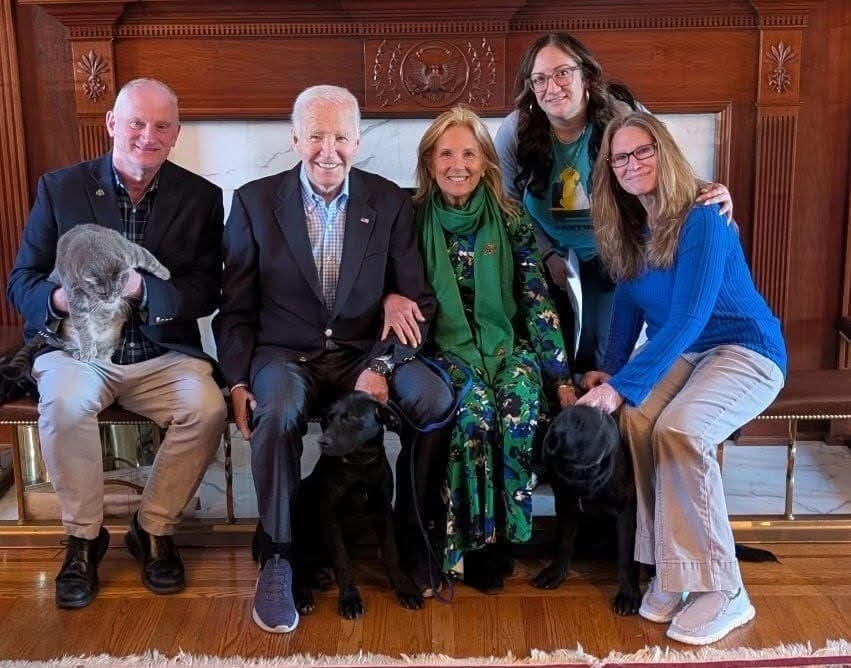
And sometimes, adjustment takes time — or doesn’t.
Willow, the family cat, appears to be handling the transition just fine… holding what looks like a daily morning briefing with her new companions.