MARCH 20: Oil Shock Deepens, U.S. Expands Military Posture, Allies Fracture Over Hormuz

– 9 min read

Today marks the first day of spring in the Northern Hemisphere and autumn in the Southern Hemisphere — the point at which sunlight begins to favor the north until the next equinox.
President Donald Trump and Japanese Prime Minister Takaichi Sanae struck a cooperative tone during Takaichi’s first White House visit, despite tensions earlier in the week over Japan’s refusal to contribute military assets to reopening the Strait of Hormuz.
Takaichi emphasized constitutional limits on overseas military action, while both leaders confirmed expanded cooperation.
PM Takaichi:
“We confirmed that Japan and the United States will work together toward the early realization of peace and stability in the Middle East, including energy security…”
The visit also reinforced economic ties, with Japanese firms set to invest up to $73 billion in U.S. nuclear and natural gas infrastructure.
The meeting, however, included a striking exchange:
President Trump:
"We wanted surprise. Who knows better about surprise than Japan? Why didn't you tell me about Pearl Harbor?"
Trump also reiterated unpredictability in military strategy:
“I’m not putting troops anywhere… and if I did, I wouldn’t tell.”
Energy markets continue to react sharply to the expanding conflict.
President Trump sought to reassure markets:
“it's going to be over with pretty soon.”
But nearly three weeks into the war, there is no clear de-escalation.
At the same time, the U.S. is taking steps to "stabilize global energy markets".
The Treasury Department issued a short-term authorization allowing the sale of Iranian oil already stranded at sea, unlocking approximately 140 million barrels into global supply.
Treasury Secretary Scott Bessent said:
“By temporarily unlocking this existing supply for the world, the United States will quickly bring approximately 140 million barrels of oil to global markets… In essence, we will be using the Iranian barrels against Tehran to keep the price down as we continue Operation Epic Fury.”
He emphasized the measure is limited in scope, applying only to oil already in transit and not allowing new production, adding that Iran would face difficulty accessing the revenue.
Nine U.S. allies — including Canada, UK, France, Germany, Italy, Netherlands, Japan, Latvia and Finland — pledged support for securing Hormuz, though without operational details.
Joint statement:
“We express our readiness to contribute to appropriate efforts to ensure safe passage through the Strait.”
Meanwhile, Europe is bracing for economic fallout.
European Commission President Ursula von der Leyen confirmed plans to cut electricity taxes and subsidize energy prices.
Spain announced €5 billion in support measures, while Prime Minister Pedro Sánchez sharply criticized the war:
“We are against this war because it's illegal… and is causing a lot of damage.”
EU foreign policy chief Kaja Kallas warned:
“Iran's attacks on Qatar’s energy infrastructure are deepening the chaos. The war… needs an exit, not an escalation.”
Qatar’s former prime minister issued one of the strongest regional warnings:
“What you are doing now… widens the rift… You are pushing the region toward the abyss of a mad war.”
At the same time, Qatar expelled Iranian military and security attachés, declaring them persona non grata within 24 hours.
Türkiye’s President Erdoğan went several steps further:
"The Middle East is boiling right now, and as is known, "Zionist Israel has killed hundreds of thousands of people". God willing, it will pay the price for this. I have no doubt about that."
The language used by leaders is becoming sharper — reflecting not only escalation on the ground, but in rhetoric.
The U.S. posture remains contradictory: expanding militarily while signaling a possible drawdown.
Trump:
“You don’t do a cease-fire when you’re literally obliterating the other side.”
At the same time, he posted that the U.S. is “getting very close” to its objectives and may consider "winding down" operations.
The Pentagon is also preparing for possible ground troop scenarios, despite public denials.
White House:
“It’s the job of the Pentagon to make preparations… it does not mean the President has made a decision.”
The administration is preparing a $200 billion funding request for the war.
Trump called it:
“a small price to pay.”
But lawmakers — including Republicans — are questioning both cost and lack of congressional approval.
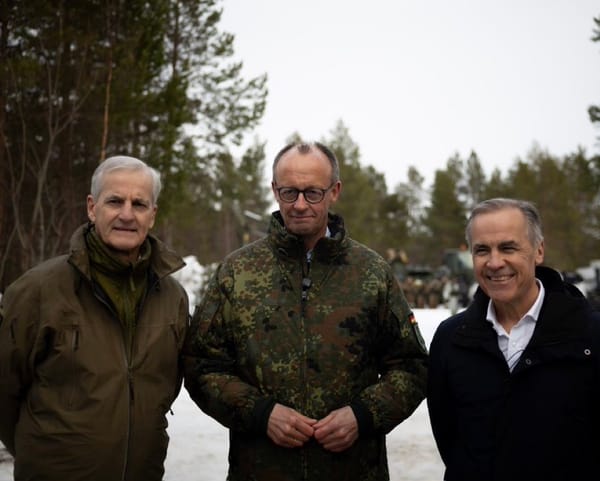
Trump sharply criticized NATO and allies for inaction in Hormuz:
“Without the U.S.A., NATO IS A PAPER TIGER!”
He added:
“They complain about the high oil prices… but don’t want to help open the Strait of Hormuz… COWARDS, and we will REMEMBER!”
In a separate exchange:
“They should be helping with the strait… NATO’s gone down a long way.”
In a 15-minute call with Stephanie Ruhle (MS NOW), Trump stated:
Avoid stenography.
Russia reportedly floated a proposal to Washington: stop sharing intelligence with Iran in exchange for the U.S. cutting intelligence support to Ukraine. The U.S. rejected the offer — but the proposal itself signals how conflicts are increasingly being treated as bargaining chips.
Meanwhile, Russian military aircraft activity near the United States and Canada is now occurring at levels “above historical norms,” according to the head of U.S. Northern Command and NORAD.
Taiwan rejected China’s reunification proposal as “impossible”
PLA air activity around Taiwan’s Air Defense Identification Zone paused completely for 11 non-consecutive days between late February and early March — the longest break since Taiwan began publishing daily data in 2020.
The pause likely coincided with China’s annual “Two Sessions” political meetings (March 4–11), when military activity typically declines, though a complete halt is unprecedented. Alternative explanations — including recent PLA leadership purges — appear less likely, as naval operations continued at normal levels, with 76 vessel transits recorded near Taiwan during the same period.
Air activity resumed on March 11, returning to a pattern of regular incursions.
China’s latest economic data came in stronger than expected, with retail sales rising 2.8% year-on-year and fixed asset investment rebounding to 1.8%, driven primarily by infrastructure (+11.4%) and equipment spending (+11.5%) as the new Five-Year Plan cycle begins.
However, underlying weaknesses remain: private investment is still contracting (-2.6%), the real estate sector continues to decline with new starts down 23%, and inflation remains subdued. Consumer prices rose just 0.8% on average in the first two months of the year — well below the 2.0% target — while producer prices remained in deflation at -0.9%.
Despite ample liquidity, credit demand is weak, suggesting that stronger demand-side stimulus may be needed to sustain growth.
European Commission President Ursula von der Leyen is set to travel to Canberra next week as the European Union and Australia move toward finalizing a long-delayed trade agreement.
The deal is now seen as part of a broader effort by both sides to diversify trade partnerships amid rising geopolitical and economic uncertainty.
Afghanistan and Pakistan announced a temporary ceasefire for the Eid al-Fitr holiday following mediation by neighboring countries. The pause is expected to hold through early next week.
The agreement comes amid heightened tensions and follows a deadly strike on a drug rehabilitation hospital in Afghanistan, which Taliban officials say killed more than 400 people.
The ceasefire offers a short-term de-escalation, but underlying tensions between the two countries remain unresolved.
A French naval officer inadvertently revealed the location of the aircraft carrier Charles de Gaulle after recording a workout on the fitness app Strava. The activity, tracked at sea, allowed observers to pinpoint the carrier’s position in near real time.
Bottom line: even routine personal data — like a fitness run — can compromise military operations.
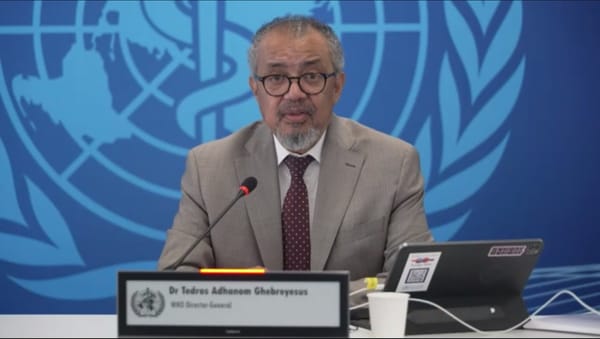
UN Secretary-General António Guterres called for an immediate halt to the escalation, urging the United States and Israel to end their strikes on Iran — and calling on Tehran to stop attacks on neighboring Gulf states.
Meanwhile, a UN-backed proposal is moving forward to address the growing maritime crisis in the region. Around 20,000 seafarers on nearly 2,000 vessels remain stranded in the Gulf, as threats and attacks have effectively halted shipping through the Strait of Hormuz.
The proposal, supported by multiple countries, would establish a safe maritime corridor to allow ships and their crews to evacuate the high-risk area.
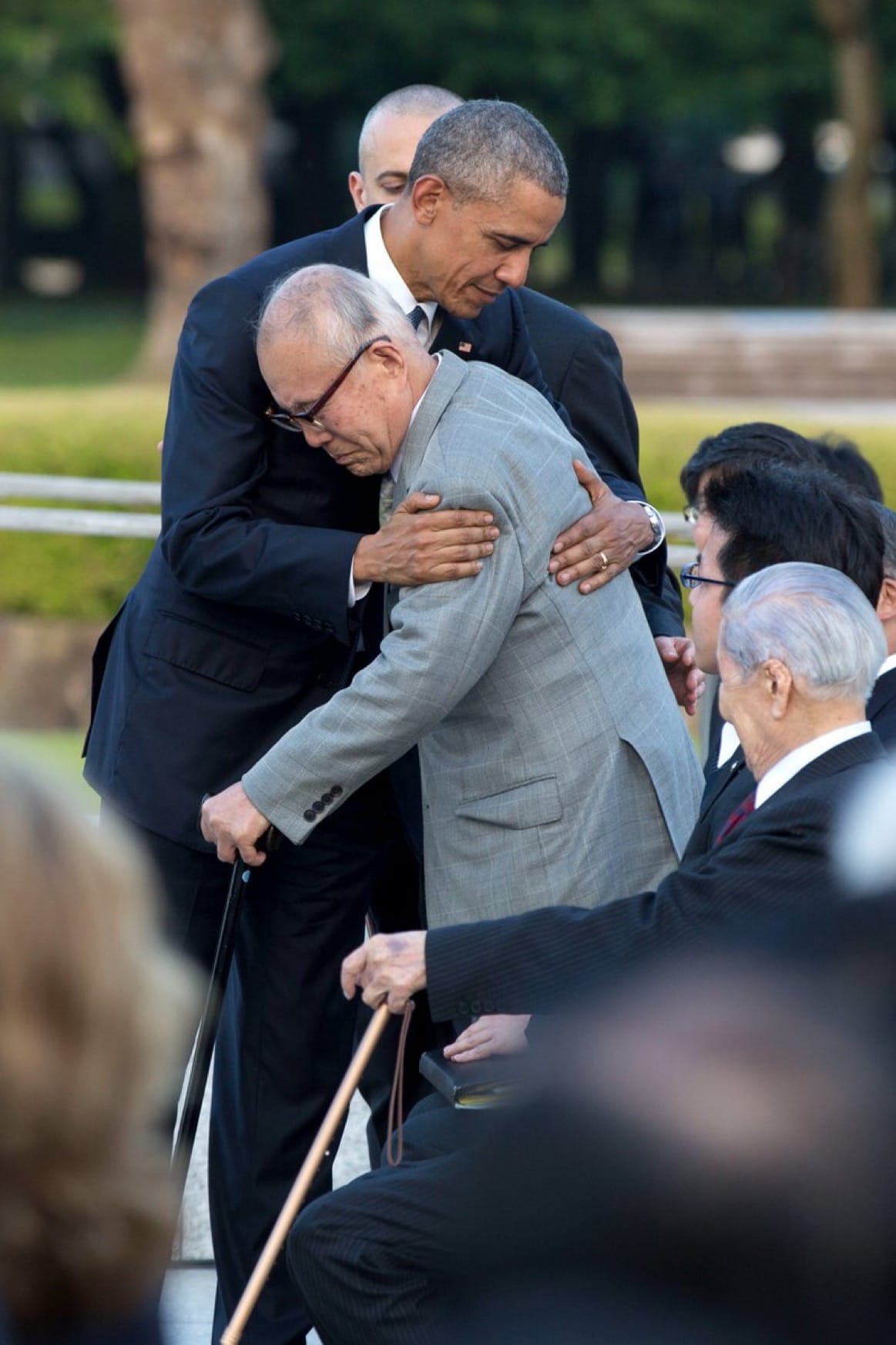
The Obama Foundation paid tribute to Shigeaki Mori, the Hiroshima atomic bomb survivor whose life became a quiet but powerful example of moral courage, memory, and reconciliation.
Mori died Sunday at the age of 88.
Among the more than 140,000 people killed in Hiroshima, Mori later discovered that 12 American prisoners of war had also died in the bombing — a fact that had not been fully known to their families. Decades later, he researched their identities and wrote to relatives so they could finally understand what had happened to their loved ones.
When President Obama visited Hiroshima in 2016 — the first sitting U.S. president ever to do so — he pointed to Mori’s work as a reminder that history does not only belong to states, armies, or leaders. It also belongs to individuals who choose humanity over bitterness.
President Obama said:
“We’re not bound by genetic code to repeat the mistakes of the past. We can learn. We can choose. We can tell our children a different story – one that describes a common humanity; one that makes war less likely and cruelty less easily accepted.
We see these stories in the hibakusha – the woman who forgave a pilot who flew the plane that dropped the atomic bomb, because she recognized that what she really hated was war itself; the man who sought out families of Americans killed here, because he believed their loss was equal to his own.”
In honoring Mori, the Obama Foundation framed his life not only as a witness to one of history’s darkest moments, but as an example of what it means to resist cruelty without surrendering compassion.
In telling the story of loss as something universal rather than national, Mori offered something rare: proof that memory can divide, but it can also repair.
And a quieter reminder of humanity in everyday life:
The President of Ireland is known for bringing his dog along to official engagements — a small but widely shared detail that has come to symbolize something simple: leadership does not have to be distant to be respected.
For those looking to go beyond the headlines, this week’s ONEST+ Deep Dive examines a critical question:
What happens if NATO doesn’t collapse — but simply stops functioning?
As global conflicts expand and alliance expectations shift, the risks may be less visible — but more consequential.