MARCH 16: U.S.–Iran War Enters Third Week; Allies Reject Hormuz Coalition; Israel Expands Lebanon Operations
As the U.S.–Iran war expands across the Gulf, allies resist calls to secure the Strait of Hormuz while global diplomacy strains under widening conflict.
Middle East war widens The U.S.–Iran conflict has entered its third week with strikes continuing across Iran, Israel and Lebanon while retaliatory attacks spread across the Gulf and Iraq.
Hormuz standoff escalates Washington is urging allies to deploy naval forces to reopen the Strait of Hormuz, but several governments — including Germany, Japan, Australia and Canada — have declined involvement.
Israel prepares prolonged campaign Israeli military officials say operations in Iran and Lebanon will continue, with new targets identified daily and ground operations launched in southern Lebanon.
Global divisions emerge Western governments are increasingly distancing themselves from the U.S. war effort while urging de-escalation and warning of severe humanitarian consequences in Lebanon.
NUMBERS TO WATCH
• 6 U.S. airmen — confirmed killed in the KC-135 crash in Iraq • $57 billion — energy agreements announced at the U.S.–Japan forum in Tokyo • 10 ballistic missiles — launched by North Korea during weekend tests • 1,000+ Kenyan fighters — believed to have been recruited by Russia for the war in Ukraine
MIDDLE EAST
IRAN
A fifth member of Iran’s women’s national soccer team who had previously sought asylum in Australia has reversed her decision and will return to Iran, according to Australian media reports.
The case follows a series of high-profile asylum requests from Iranian athletes in recent years.
Meanwhile, satellite imagery provider Planet Labs confirmed it temporarily extended delays on publishing certain Middle East imagery during the ongoing conflict.
The company initially implemented a four-day delay but later extended the hold to fourteen days. Planet Labs said the measure was intended to prevent publicly available imagery from being used to help target U.S. or allied forces.
Despite widespread speculation online, there is no evidence that the delay was introduced to conceal damage from strikes in the region.
THE GULF
Speaking Monday during a Kennedy Center board lunch held in the East Room of the White House, United States President Donald Trump said Washington had been surprised by Iran’s attacks on Gulf states.
“Nobody expected” Iran to strike Qatar and other Gulf neighbors, he said, adding that Tehran “was not supposed to go after” them.
Trump also claimed the war, coordinated between the United States and Israel, had already “eliminated” most of Iran’s missile capabilities.
Later he added:
“It’s not a question of like … should you have known, and if we did know, big deal. I mean, we have to do what we have to do.”
Egypt also weighed in diplomatically. According to the Egyptian presidency’s spokesperson, President Abdel Fattah el-Sisi spoke with Qatar’s Emir and expressed Cairo’s support.
During the conversation, Sisi affirmed Egypt’s readiness:
“to provide all necessary support to preserve the security and stability of the Gulf countries”.
Regional debate over Gulf relations with Washington has also intensified. A Kuwaiti political analyst criticized the Gulf’s longstanding policy toward the United States and Trump adviser Jared Kushner in remarks circulating widely online.
Meanwhile the World Health Organization announced an additional $2 million in emergency funding to support health systems in Lebanon, Iraq, and Syria. The funding comes as U.S. and Israeli strikes on Iran continue alongside Iranian counter-strikes across the Gulf and broader region.
ISRAEL – LEBANON
Israeli military spokesperson Brigadier General Effie Defrin told reporters that Israel intends to continue operations both in Iran and Lebanon until the objectives of the current campaign are achieved.
According to Defrin, the Israeli military is identifying new targets every day.
International leaders have also issued a joint statement addressing the escalating conflict.
The leaders of Canada, France, Germany, Italy, and the United Kingdom said:
“We are gravely concerned by the escalating violence in Lebanon and call for meaningful engagement by Israeli and Lebanese representatives to negotiate a sustainable political solution. We strongly support initiatives to facilitate talks and urge for immediate de-escalation.
Hezbollah's attacks on Israel and the targeting of civilians must cease and they must disarm. We condemn Hezbollah's decision to join Iran in hostilities, which further jeopardises regional peace and security.
We condemn attacks directed at civilians, civilian infrastructure, health workers and infrastructure, as well as the United Nations Interim Force in Lebanon.
These actions are unacceptable, and we call on all parties to act in accordance with international humanitarian law.
A significant Israeli ground offensive would have devastating humanitarian consequences and could lead to a protracted conflict. It must be averted. The humanitarian situation in Lebanon, including ongoing mass displacement, is already deeply alarming.
We reiterate our call for the full implementation of UNSC Resolution 1701 by all parties and support the efforts of the Government of Lebanon to disarm Hezbollah, prohibit Hezbollah's military activities, and curb their armed hostilities. We stand in solidarity with the Lebanese government and people.”
U.S.–IRAN WAR
As the war with Iran enters its third week, pressure is mounting around the strategic Strait of Hormuz.
President Trump has intensified calls for allied countries to assist in reopening the critical shipping route after Iran effectively blocked access to the waterway.
A U.S. strike on Iran’s Kharg Island — home to a major oil export terminal — failed to break the blockade.
Iranian Foreign Minister Abbas Araghchi warned Tehran would respond by targeting energy infrastructure linked to the United States in the region.
At the same time, the U.S. military presence in the Middle East continues to grow, with additional warships and thousands of Marines reportedly deployed.
Trump told NBC News that Iran was ready to end the war — a claim Araghchi publicly denied.
Escalation across the region
Air strikes have spread across several countries.
Following Iran’s retaliation warning, Saudi Arabia and the United Arab Emirates were targeted by attacks that caused fires at a UAE port and airport.
A drone strike also hit the U.S. Embassy compound in Baghdad over the weekend, prompting the embassy to urge Americans to leave Iraq.
Meanwhile, fighting has continued across Israel, Iran, and Lebanon.
An Israeli military spokesperson told CNN the conflict could last at least three more weeks, while Israeli ground operations in southern Lebanon were announced Monday.
THE STRAIT OF HORMUZ
President Trump has urged multiple countries to send naval forces to protect shipping through the strait.
In a social media post Saturday he wrote:
“Many Countries, especially those who are affected by Iran's attempted closure of the Hormuz Strait, will be sending War Ships, in conjunction with the United States of America, to keep the Strait open and safe.
We have already destroyed 100% of Iran's Military capability, but it's easy for them to send a drone or two, drop a mine, or deliver a close range missile somewhere along, or in, this Waterway, no matter how badly defeated they are.
Hopefully China, France, Japan, South Korea, the UK, and others, that are affected by this artificial constraint, will send Ships to the area so that the Hormuz Strait will no longer be a threat by a Nation that has been totally decapitated.
In the meantime, the United States will be bombing the hell out of the shoreline, and continually shooting Iranian Boats and Ships out of the water.
One way or the other, we will soon get the Hormuz Strait OPEN, SAFE, and FREE!
President DONALD J. TRUMP”
However, several governments have already rejected the request.
Countries that have declined involvement include:
France, Germany, Italy, Spain, the United Kingdom, Japan, Norway, Australia, and Canada.
China, the Netherlands, and South Korea have not yet issued formal responses.
Norway’s finance minister and former NATO Secretary-General Jens Stoltenberg stated the attack on Iran was unlawful and said this represents Norway’s official position.
Germany issued an even stronger response.
The German foreign ministry said:
“We first need to hear from the US & Israel when they expect to have achieved their military objectives in Iran before we can jointly define a future security architecture for the region. Until then, there is no role for NATO or the EU’s Operation Aspides.”
German Defense Minister Boris Pistorius also rejected Trump’s request for military support and emphasized Germany’s preference for diplomacy.
Japan and Australia similarly confirmed they do not plan to send naval escorts.
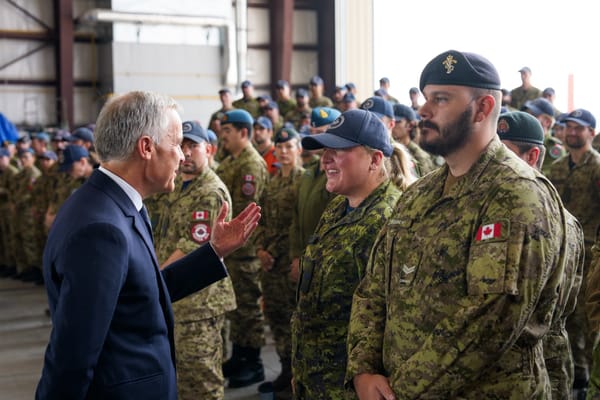
Canada’s defense minister David McGuinty said:
“Canada was not consulted before the prosecution of this particular war. Canada is not involved in the prosecution of this war and Canada has no intention of being involved in the prosecution of this war.”
Iran has stated that the Strait of Hormuz remains open to countries not involved in the conflict, provided they receive permission from Tehran.
When asked aboard Air Force One why the United States was deploying 5,000 Marines and sailors to the region, Trump responded to a reporter:
“You’re a very obnoxious person.”
NEW WAR ON THE HORIZON?
According to the New York Times, the United States has informed Cuba that meaningful progress in negotiations would require President Miguel Díaz-Canel to step down.
Speaking at the White House, Trump said:
“I do believe I'll be having the honor of taking Cuba. That's a big honor. Taking Cuba in some form. I think I can do anything I want with it, if you want to know the truth. They’re a very weakened nation.”
U.S.–CHINA TALKS
In Paris, U.S. Treasury Secretary Scott Bessent and Chinese Vice Premier He Lifeng are concluding two days of meetings aimed at preparing for a planned Trump visit to China later this month.
Sources told Reuters the discussions have been “remarkably stable.”
However tensions remain.
Trump suggested Sunday that he might postpone the trip while urging China to help reopen the Strait of Hormuz.
China’s commerce ministry also criticized a new U.S. trade investigation targeting Chinese companies.
Asia Society Policy Institute Vice President Wendy Cutler said a delay in the planned March 31–April 2 visit now appears increasingly likely.
According to Cutler, the Trump administration reframed the possible postponement as a logistical issue tied to the Middle East war rather than frustration with Beijing.
She also noted that both sides have had relatively little time to develop substantial agreements ahead of the summit.
Still, discussions reportedly made progress on potential Chinese commitments to purchase more U.S. agricultural goods, energy, and aircraft.
Later Monday, the delay was confirmed.
President Trump said he asked China to postpone the summit with President Xi Jinping by about a month while the United States deals with the Middle East conflict.
U.S.–JAPAN
At an energy forum in Tokyo over the weekend, the United States and Japan finalized agreements worth $57 billion with Asia-Pacific partners.
Interior Secretary Doug Burgum said the deals include a commitment by the U.S. Export-Import Bank to finance up to $4.2 billion in nuclear fuel purchases by Japanese and South Korean buyers from a California-based company.
UNITED STATES
Four former U.S. presidents — Bill Clinton, George W. Bush, Barack Obama, and Joe Biden — have denied speaking recently with Donald Trump.
Trump had claimed earlier Monday that a former president told him:
“I wish I did what you did.”
Aides for all four former presidents told CNN there is no record of any communication.
Military developments
All six U.S. Air Force personnel aboard a KC-135 Stratotanker that crashed in western Iraq on March 12 have been confirmed dead, U.S. Central Command announced.
The Pentagon has also opened a formal investigation into a February 28 strike in Minab, Iran, where Iranian officials say dozens of children were killed at a school near a military compound.
Meanwhile, the U.S. Air Force awarded Boeing $2.4 billion in contract modifications to continue development of the E-7 Wedgetail airborne battle management aircraft.
Weather emergency
A massive storm system is disrupting travel across the United States, bringing severe thunderstorms, tornado warnings, and blizzard conditions in several regions.
Forecasts warn:
• extreme heat in the Southwest • widespread power outages in parts of the Midwest • continued concern in Colorado over a record snow drought that could increase wildfire risks.
Economy and policy
Oil prices continue to climb. The U.S. energy secretary said there is “no guarantee” prices will fall soon.
The State Department has reduced the cost of renouncing U.S. citizenship to $450, down from $2,350.
The SEC is preparing a proposal that would allow companies to report earnings twice a year instead of quarterly, potentially ending a practice that has existed for more than five decades. Supporters say the move could encourage more companies to remain publicly listed, though investors are expected to oppose the change.
Technology
An Nvidia-backed artificial intelligence startup, Reflection AI, is partnering with South Korean conglomerate Shinsegae to build one of the country’s largest AI data centers.
Officials say the project reflects Washington’s strategy of using AI technology partnerships to strengthen alliances.
At Nvidia’s annual GTC conference, CEO Jensen Huang unveiled a range of new hardware and software designed to run AI models faster and more efficiently.
IN NUMBERS
• Afghanistan / Pakistan: Pakistani airstrikes have killed at least 75 civilians in Afghanistan. • Cuba: A peaceful protest in the city of Morón ended with arson at the Communist Party headquarters. • West Bank: Israeli soldiers killed four members of a Palestinian family as regional violence intensifies.
EUROPE
MOLDOVA
President Maia Sandu said Russia’s strike on Ukraine’s Novodnistrovsk hydropower plant caused oil to spill into the Nistru River, threatening Moldova’s water supply.
The government has declared an environmental alert.
Sandu said Russia “bears full responsibility.”
POLAND
Prime Minister Donald Tusk warned that a possible “Polexit” is becoming a real risk.
Speaking to Politico, Tusk accused nationalist President Karol Nawrocki and right-wing opposition parties of pushing Poland toward leaving the European Union.
KAZAKHSTAN
Exit polls suggest voters approved constitutional changes in a national referendum.
The reforms would consolidate presidential power by creating a new body of presidential appointees with authority to introduce legislation and referendums.
Radio Free Europe reported several journalists were briefly detained while covering the vote.
CANADA AND THE NORDIC STATES
Canada and the five Nordic countries — Denmark, Finland, Iceland, Norway, and Sweden — announced deeper cooperation on defense production following a meeting in Oslo.
The move comes amid tensions with the United States after threats from President Trump directed at Canada and Denmark, including remarks about Greenland.
Canada is considering purchasing submarines from Norway and Germany and fighter aircraft from Sweden.
During a press conference, Danish Prime Minister Mette Frederiksen praised Canadian Prime Minister Mark Carney:
“The speech you gave in Davos, I have never experienced anything like this. I mean, people in Denmark have been talking about, they have been reading your speech. And I don't think I have ever heard so many reflections on a speech from a colleague.”
Iceland’s Prime Minister Kristrún Frostadóttir added:
“I think there's a lot of not just leaders out there but also general publics in a lot of different countries around the world that are very thankful for the leadership Canada has shown over the past few months.”
Norwegian Prime Minister Jonas Gahr Støre also praised Denmark for defending Greenland and the principles of international law.
Prime Minister Carney said Canada must reduce dependence on U.S. defense procurement:
“Historically, more than 70¢ on the dollar has gone to the US. That's not an effective way to build our industry or to protect our people ... given the maritime and Arctic nature of the security needs we have, the Nordic countries are natural partners for Canada.”
ONEST will publish a deeper analysis of Carney’s diplomatic tour tomorrow.
NATO Secretary-General Mark Rutte is scheduled to visit Norway on March 17–18 to observe the Cold Response military exercise.
UKRAINE
Ukraine is providing international partners access to real battlefield data to help train artificial intelligence systems for autonomous drone warfare.
Kyiv says the initiative — built on data from first-person-view combat drones — is the first program of its kind.
President Volodymyr Zelenskyy also held a phone call with Portugal’s newly elected president António José Seguro.
Zelenskyy thanked Portugal for its continued defense, financial, humanitarian, and political support and discussed cooperation on weapons production and reconstruction projects.
RUSSIA – KENYA
Russia has agreed to stop recruiting Kenyan citizens to fight in the war in Ukraine.
Kenyan Foreign Minister Musalia Mudavadi announced the decision after talks in Moscow with his Russian counterpart.
Kenya’s intelligence services believe more than 1,000 Kenyan fighters have been deployed to the war with limited training.
NORTH KOREA
North Korea launched approximately ten ballistic missiles into the East Sea on Saturday, according to South Korea’s military.
The tests coincided with joint U.S.–South Korean military exercises and followed discussions between South Korean Prime Minister Kim Min-seok and Donald Trump about potentially resuming nuclear negotiations with Pyongyang.
UNITED NATIONS
The UN Security Council unanimously adopted a resolution extending the mandate of the UN Assistance Mission in Afghanistan (UNAMA) for three months.
All fifteen members voted in favor.
VATICAN
Pope Leo XIV urged journalists to focus on the human cost of war rather than amplify propaganda.
In a meeting with broadcasters from Italy’s TG2 news program, he said reporters should:
“show the face of war and tell it through the eyes of the victims, so as not to turn it into a video game.”
HUMANITY
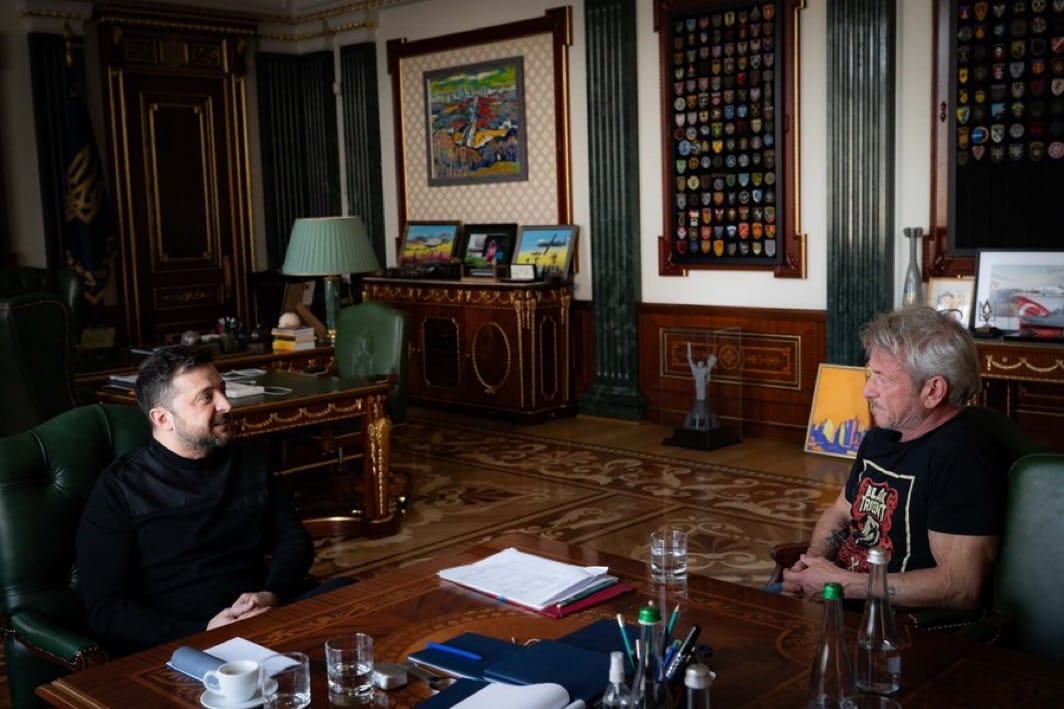
At the 2026 Academy Awards held March 15, actor Sean Penn won Best Supporting Actor for his role in One Battle After Another.
Instead of attending the ceremony, Penn traveled to Kyiv.
President Zelenskyy wrote:
“Sean, thanks to you, we know what a true friend of Ukraine is. You have stood with Ukraine since the first day of the full-scale war. This is still true today. And we know that you will continue to stand with our country and our people.”
Olga Nesterova is a journalist and founder of ONEST Network, a reader-supported platform covering U.S. and global affairs. A former White House correspondent and UN diplomat, she focuses on international security and geopolitical strategy.