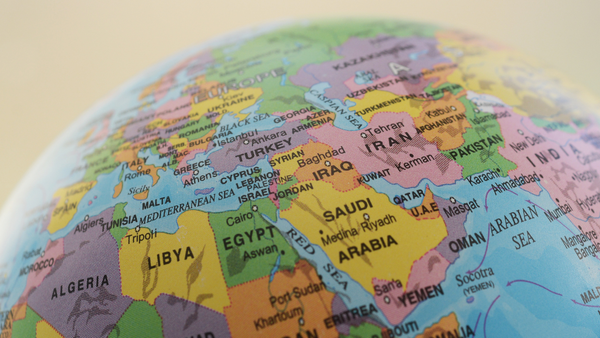
As the war between the United States, Israel, and Iran expands, Qatar is confronting a reality it long sought to avoid: direct exposure to a regional conflict it once helped contain.
At a high-level briefing hosted by the Middle East Council, senior Qatari officials and experts outlined how the region has entered a new phase—one where traditional security assumptions are breaking down, energy systems are under strain, and even the Gulf’s role as a global stabilizer is being tested.
H.E. Dr. Majed Mohammed Al-Ansari, Advisor to Qatar’s Prime Minister and Foreign Minister, described how Qatar’s long-standing strategy—neutrality and open dialogue—has been overtaken by events.
Qatar positioned itself as a mediator amid rising Iran–Israel tensions, maintaining communication channels with all sides. But that role has become increasingly difficult as conflict dynamics shifted.
A key turning point, he said, was Israel adopting a more proactive approach to targeting potential threats.
When war between the U.S./Israel and Iran escalated, Qatar anticipated it would be drawn in—not as a participant, but as leverage.
Iran targeted Qatar, believing pressure on U.S. assets in the country would force Washington to reconsider the war. That assumption proved wrong.
Instead, Qatar now faces direct attacks on its territory, including civilian infrastructure—an unprecedented development for a country known for its stability.
“We are a calm country with a close-knit community. Now we are seeking shelter. This was unimaginable—and now it is part of our daily life.”
Security Assumptions Collapse
Among the most striking observations was that the region’s long-standing security model has failed.
For decades, the presence of U.S. military forces in the Gulf was seen as a deterrent. That assumption no longer holds.
Qatar is now recalibrating toward a more complex framework:
- Continued reliance on U.S. security cooperation
- Potential expansion of partnerships with Europe
- Increased regional defense integration within the Gulf
European engagement is already shifting. French, Italian, and German involvement is increasing, pointing toward closer security cooperation.
Still, Al-Ansari was blunt:
“When we are faced with war, the main burden will be on us—not our partners.”
Under Fire: The Reality of Modern Defense
Rashid Al-Mohanadi, Nonresident Fellow at the Middle East Council, detailed how Gulf defense systems are adapting in real time.
According to briefing participants:
- Ballistic missiles intercepted: ~90%
- Jet threats neutralized: ~100%
- Drone interception (Shahed-type): improved from 70–80% to ~90%
These gains reflect decades of post–Gulf War military modernization and increasing regional coordination, including shared radar and air defense systems.
But the economics of warfare remain complex.
Contrary to common assumptions, defending against drones is not always prohibitively expensive. Lower-cost interception systems—rather than high-end Patriot missiles—are often used.
Meanwhile, Iran’s capabilities are shaped by sanctions:
- A single Shahed drone can cost ~$100,000 due to smuggling constraints
- Ballistic missiles carry limited military effectiveness but significant psychological impact, echoing WWII-era V1/V2 strikes on European cities
Energy at the Breaking Point
Perhaps the most consequential warning came from Dr. Mohammed Al-Hashemi, an energy expert formerly advising QatarEnergy.
His message: this is not just an energy crisis—it is a systemic shock.
Qatar’s liquefied natural gas (LNG) infrastructure is among the most complex and tightly regulated in the world. Even minor safety incidents trigger full reporting chains.
Operating under active conflict conditions is not simply difficult—it is, in many cases, unworkable.
The LNG supply chain is highly vulnerable:
- Offshore extraction
- Transport to shore (now exposed to drones and missiles)
- Processing into LNG (shrunk 600x in volume)
- Storage in cryogenic facilities
- Shipment through the Strait of Hormuz
- Delivery to global markets
There are no viable alternatives to Hormuz due to geography.
And unlike oil, LNG is rigid:
- Infrastructure cannot be quickly reconfigured
- Contracts are long-term and inflexible
- Supply chains are deeply interdependent
“LNG is not a flexible commodity… this is not something you can simply adapt.”
A Reversal of the Ukraine Playbook
The comparison to Russia’s invasion of Ukraine—often cited in energy discussions—only goes so far.
In 2022, Europe reduced dependence on Russian gas by sourcing alternatives, including LNG.
Today, the situation is fundamentally different:
“Then LNG was part of the solution. Now LNG is part of the problem.”
This crisis affects not just supply—but production, shipping, insurance, and maritime security simultaneously.
The implications are global:
- Higher energy costs ripple through industrial production
- Sectors like aluminum manufacturing become more expensive
- Global inflation pressures intensify
The Strait of Hormuz: No Easy Fix
The closure—or disruption—of the Strait of Hormuz represents one of the most dangerous escalation points.
A military solution is theoretically possible—but highly risky.
Mine warfare, in particular, presents a severe challenge:
- Mines are easy to deploy but difficult to remove
- Mine-sweeping capacity is limited
- Operations would be slow, complex, and dangerous
“It would be a very, very messy endeavor.”
There are also signs of military assets shifting from the Indo-Pacific toward the region—suggesting preparations for potential escalation.
Still, experts emphasized: a diplomatic solution remains the preferred path.
A Region Rewriting Its Future
The broader takeaway from the briefing is stark:
The Gulf states are entering a new era—one they did not choose, but must now navigate.
Key shifts underway:
- Greater emphasis on military deterrence
- Continued commitment to mediation diplomacy
- Expansion of regional and international partnerships
- A search for a political framework to avoid perpetual conflict
Qatar, in particular, finds itself balancing two competing imperatives:
• Strengthening defenses amid Iranian retaliation and spillover from Israeli military operations
• Maintaining relationships with all sides to preserve its role as mediator
Why This Matters Globally
The Gulf is not just an energy hub—it is a central node of the global economy:
- Energy exports
- Aviation and logistics (Doha, Dubai, Abu Dhabi)
- Sovereign investment flows
A sustained disruption would not remain regional.
“If this system stops, almost every economy in the world will feel it.”
Bottom Line
The briefing underscored a profound shift:
- The old security guarantees are no longer sufficient
- Energy systems are more fragile than previously understood
- The cost of escalation is global, not regional
And perhaps most importantly:
The window for diplomacy is narrowing—but still open.