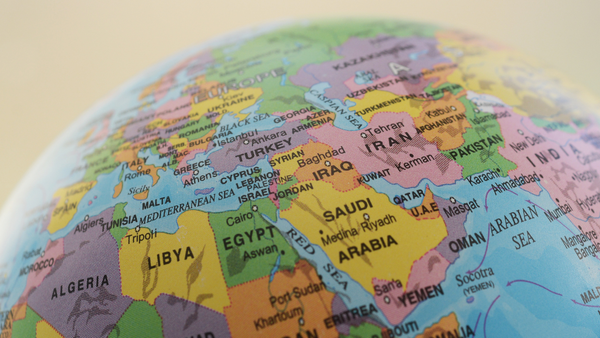
There is a narrative emerging — that this war could expand, that Saudi Arabia and the UAE may join, and that this moment is being framed by some as a "historic opportunity" to reshape the region.
But before we go further, one critical reality check:
As of now, Iran is publicly rejecting the idea that negotiations with the United States are even taking place.
Iran’s UN envoy stated there has been no contact — direct or indirect — with Washington, and openly questioned the usefulness of talks, saying the only language right now is “defense.”
Iranian officials have also denied sending messages to the U.S. and signaled preparation for a prolonged war.
That matters — because it means this is not (yet) a war moving toward a negotiated endpoint.
It is a war moving toward escalation.
What changes if Saudi Arabia and the UAE enter the war
If Saudi Arabia and the UAE formally join, the conflict fundamentally shifts.
This stops being a U.S.–Israel vs Iran confrontation with regional spillover.
It becomes a full-scale Gulf war.
The battlefield expands:
- From Iran–Israel exchanges
- To energy infrastructure, ports, desalination plants, shipping lanes, and U.S.-linked bases across the Gulf
This is no longer about strikes.
This becomes about systems — energy, water, trade, and survival infrastructure.
What would the goal actually be?
Not conquest.
Iran is not a country that can be “taken” in a conventional sense:
- Mountainous terrain
- Strategic depth
- Large population
- Proven ability to absorb prolonged war (Iran–Iraq war lasted 8 years)
So what is the real objective?
To break Iran’s ability to project power.
That includes:
- Missile and drone capabilities
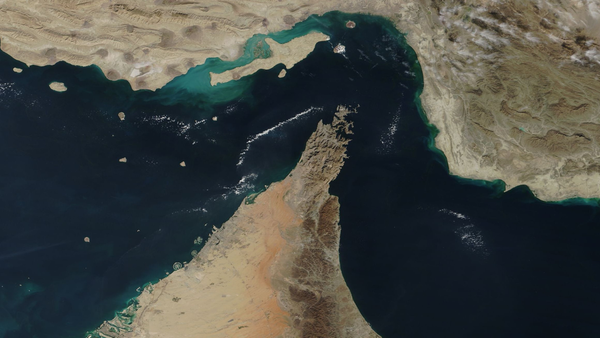
- Naval disruption in the Strait of Hormuz
- Proxy networks across the region
- Energy coercion
And ultimately:
To force Iran into a far weaker negotiating position than the one that existed under the nuclear deal Trump rejected.
This is the paradox:
The war may aim to destroy the deal — only to return to a harsher version of it.
Iran’s likely response: widen, not mirror
Iran is unlikely to fight this as a purely conventional war.
Instead, it will escalate asymmetrically:
- Strikes on oil facilities
- Disruption of shipping
- Cyber attacks
- Proxy activity across multiple countries
- Pressure on Gulf civilian infrastructure
Iran does not need to defeat Saudi Arabia or the UAE militarily.
It only needs to prove one thing:
That their economic model — stability, investment, global integration — can be disrupted at will.
The hidden vulnerability: water, not oil
The real risk is not just oil.
It is water.
The Gulf depends heavily on desalination:
- 100% of drinking water in Bahrain and Qatar
- Over 80% in the UAE
- Around 50% in Saudi Arabia
These systems rely on seawater intake.
If:
- Oil contamination spreads
- Infrastructure is targeted
- Or worse — Bushehr nuclear contamination occurs
This becomes a civilian survival crisis, not just a military one.
There is already precedent: early in this war, a desalination facility disruption in Iran affected water supply to multiple villages — showing how quickly this vulnerability can materialize.
What happens to Qatar, Oman, Bahrain?
Qatar
- Energy superpower (LNG)
- Highly exposed infrastructure (Ras Laffan)
- Depends on Hormuz
Qatar becomes too strategic to stay neutral — even if it tries to remain diplomatic.
Oman
- Key mediator in U.S.–Iran talks
- Controls part of the Strait of Hormuz
Oman becomes both:
- Last diplomatic bridge
- And frontline geography
Bahrain
- Hosts U.S. Fifth Fleet
- Already exposed to drone/missile incidents
If escalation deepens:
Bahrain shifts from host state to operational battlefield.
Historical reality check: Saudi Arabia’s last war
The reference point here is not 2017 — it is the Saudi-led intervention in Yemen (2015).
That war:
- Had U.S. logistical support under Obama
- Was meant to restore strategic balance
- Became prolonged, costly, and reputationally damaging
The lesson:
Wars launched for control can become wars of endurance.
And Iran is far more complex than Yemen.
What will it cost?
1. Money
- Military spending
- Air defense depletion
- Infrastructure repair
- Shipping rerouting
- Investor confidence loss
2. Energy markets
- ~20% of global oil flows through Hormuz
- ~20% of global LNG supply at risk
Even partial disruption:
- Drives oil above $100+
- Triggers global inflation
- Hits Asia and Europe immediately
3. Lives
This will not stay contained.
Casualties are already being reported — including U.S. service members killed and injured in strikes on regional bases, as well as civilian and military losses in Israel, Iran, and Lebanon.
If the war expands, casualties would rise across:
- Iran
- Israel
- Lebanon
- Gulf states
- U.S. forces stationed across the region
- Possibly Iraq, and beyond
And crucially:
Civilian infrastructure becomes a target zone.
The bigger consequence: what this diverts from
This may be the most important point.
A wider Gulf war does not stay regional.
It redistributes global attention and resources.
Indo-Pacific (China / Taiwan)
- U.S. naval and air assets shift west
- Strategic focus diluted
Europe (Ukraine, Baltics)
- Air defense systems diverted
- Political attention fragmented
Global system
- Alliance cohesion strained
- Energy shocks destabilize economies
This becomes a multi-theater strain on the same system.
Bottom line
If Saudi Arabia and the UAE join the war:
- The goal is not conquest
- It is coercion — forcing Iran into a weaker future
But the risks expand dramatically:
- Regional infrastructure war
- Water system vulnerability
- Spillover into Qatar, Oman, Bahrain
- Global energy shock
- Strategic distraction from Ukraine and Taiwan
And critically:
The war may escalate without a clear diplomatic off-ramp — because Iran is, at least publicly, not engaging in negotiations.
This is not yet a war about how it ends.
It is a war still deciding how far it goes.