APRIL 8: Ceasefire Announced, War Continues, Control Becomes the Objective

“We’re thinking of doing it as a joint venture… It’s a beautiful thing.” — Donald Trump on potential U.S.–Iran control over the Strait of Hormuz
KEY DEVELOPMENTS
A two-week ceasefire between the United States and Iran has been announced — but within hours, its limits, contradictions, and fragility were already visible.
The agreement, conditioned on the reopening of the Strait of Hormuz, reflects not a resolution, but a pause layered with competing interpretations, parallel demands, and continued military activity.
At the same time, the strategic center of gravity is becoming clearer: this war is no longer only about deterrence or defense. It is about control — of territory, of energy flows, of negotiation terms, and ultimately, of outcomes that extend far beyond the battlefield.
NUMBERS TO WATCH
$950M — Market bet placed on falling oil prices just before the ceasefire announcement
$1/barrel — Reported Iranian demand for oil transit through the Strait of Hormuz
$2M — Reported “safe passage” fees per vessel imposed since mid-March
100 — Israeli airstrikes reportedly carried out in minutes over Beirut
40 — Days of sustained regional hostilities leading up to the ceasefire
MIDDLE EAST: A CEASEFIRE WITH COMPETING REALITIES
The announcement came after escalation reached its peak.
After publicly threatening to “obliterate” Iran’s civilization, President Donald Trump reversed course, announcing a two-week ceasefire tied directly to the reopening of the Strait of Hormuz.
The framing from Washington was decisive:
- military objectives had been “met and exceeded”
- negotiations were “very far along”
- Iran’s 10-point proposal was now considered a workable basis
At the same time, Iran’s Foreign Minister Seyed Abbas Araghchi confirmed conditional alignment:
- Iran would halt operations if attacks stopped
- the Strait would reopen under coordinated control
- negotiations would proceed based on both U.S. and Iranian proposals
On the surface, this suggested convergence.
In reality, that alignment ended almost immediately.
IRAN: VICTORY NARRATIVE AND NON-NEGOTIABLE TERMS
Iran’s internal messaging tells a fundamentally different story.
In the Farsi-language version of its proposal — not reflected in English summaries — Iran explicitly includes acceptance of uranium enrichment as a core condition.
That is not a technical detail. It is a red line.
At the same time, the Supreme National Security Council framed the outcome not as compromise, but as victory:
- U.S. commitment to non-aggression
- continued Iranian control over the Strait
- removal of all sanctions
- withdrawal of U.S. forces
- compensation for damages
The statement goes further, asserting that the United States had already recognized defeat and sought ceasefire through multiple channels within days of the war’s escalation.
This is not negotiation framing.
It is strategic positioning — for both domestic and regional audiences.
THE REALITY: STRIKES CONTINUE, CONDITIONS DIVERGE
Despite the ceasefire announcement:
- Israel continued strikes on Iran
- Iran continued missile fire toward Israel
- strikes were reported in the UAE and Kuwait
- nearly 100 Israeli strikes hit Beirut within minutes
The White House stated Israel had agreed to the ceasefire.
Israel stated the ceasefire does not apply to Lebanon.
Iran warned it may reverse reopening the Strait if attacks continue.
Pakistan — which helped broker the agreement — publicly urged restraint after violations were reported.
This is not a ceasefire in the traditional sense.
It is a conditional pause layered over ongoing conflict, with each actor defining its scope differently.
STRAIT OF HORMUZ: FROM PASSAGE TO LEVERAGE
The Strait is no longer a transit route.
It is a negotiating instrument.
Iran is:
- allowing selective passage (e.g., Iraq)
- reportedly demanding payment per barrel
- considering cryptocurrency-based toll mechanisms
Six weeks ago, passage was free under international norms.
Today, it is conditional, monetized, and politicized.
At the same time, President Trump suggested a joint U.S.–Iran system to charge for passage, framing it as both a security mechanism and an economic opportunity.
“We’re thinking of doing it as a joint venture… It’s a beautiful thing.”
This reflects a deeper shift:
Control over global energy flows is now being openly discussed as a shared asset — not just a security responsibility.
U.S. POSITION: FORCE, NEGOTIATION, AND CONTROL
Messaging from Washington remains internally consistent in one respect: it combines negotiation with continued leverage.
Defense Secretary Pete Hegseth stated:
- the U.S. achieved its objectives
- operations could resume if needed
- the U.S. would “hang around” to ensure compliance
- Iran’s nuclear material would either be handed over or taken
At the same time:
- the Strait is declared open regardless of Iranian claims
- further operations remain explicitly on the table
President Trump reinforced that pressure externally:
- threatening 50% tariffs on any country supplying Iran
- continuing to frame the outcome as a U.S. victory
- positioning himself as both war-ending and war-winning
These are not conflicting messages.
They are layered signals:
agreement is possible — but only under continued pressure.
GLOBAL RESPONSE: SUPPORT, CAUTION, AND DIVISION
The G7 welcomed the ceasefire and emphasized the need for a negotiated settlement, warning of the risk of a global energy crisis.
At the same time:
- Russia and China vetoed a UN resolution aimed at reopening the Strait
- NATO Secretary General Mark Rutte is in Washington amid alliance tensions
- European governments are balancing support for diplomacy with concern over continued escalation
Even within allied positions, there is divergence.
Italy summoned Israel’s ambassador following strikes in Lebanon.
Egypt called for an immediate halt to those operations.
Israel confirmed it will continue military activity in Lebanon regardless of the ceasefire.
MARKETS: REACTING TO SIGNALS, NOT STATEMENTS
Markets responded immediately — but not uniformly.
Oil prices dropped and equities rose following the ceasefire announcement.
At the same time:
- a $950 million bet had already been placed on falling oil prices before the announcement
- aviation leaders warned disruptions could last months regardless of reopening
This reflects a key reality:
Markets are not reacting to declarations.
They are reacting to risk assessments of what actually changes — and what does not.
ISRAEL, LEBANON, AND GAZA: PARALLEL WARS CONTINUE
Israel has supported the U.S. pause with Iran — while making clear it will continue operations elsewhere.
- nearly 100 strikes reported in Beirut
- ongoing attacks in Gaza, with casualties continuing despite an earlier ceasefire framework
- pressure increasing on Hamas to agree to disarmament timelines
Former Israeli Foreign Minister Yair Lapid described the situation as a strategic failure:
“There has never been such a political disaster in all of our history… Israel wasn't even at the table when decisions were made concerning the core of our national security.”
This reflects a broader concern:
decisions shaping regional outcomes are increasingly being made outside traditional frameworks — and sometimes without key actors at the table.
THE LATEST: FRAGILITY IS THE DEFINING FEATURE
As of today, the ceasefire exists more as a contested political framework than as a settled reality on the ground.
Iran has made clear that its participation in talks with U.S. officials depends not only on the U.S.–Iran track, but also on what happens in Lebanon. That condition matters because it directly collides with Israel’s position that its operations against Hezbollah remain outside the scope of the agreement.
That contradiction sharpened further when Iranian state media reported that Tehran had again closed the Strait of Hormuz in response to Israeli strikes on Lebanon. Gen. Mousavi of the Revolutionary Guard’s aerospace command made the linkage explicit, warning that “aggression towards Lebanon is aggression towards Iran” and that Iranian forces were preparing a “heavy response.”
In other words, while Washington is trying to contain this arrangement to the U.S.–Iran file, Iran is signaling that Lebanon remains part of the same war. Israel, meanwhile, is acting accordingly from the opposite direction — continuing strikes while rejecting the idea that Lebanon is covered by the truce.
The United States has not stepped back militarily. Thousands of U.S. troops remain deployed in the region, and senior American officials have made clear that forces stand ready to resume combat operations if ordered. That means the ceasefire is not being backed by demobilization or disengagement, but by continued force posture.
This is not a stable pause.
It is a temporary alignment of interests, layered over unresolved terms, competing interpretations, and active military pressure — all under constant risk of collapse.
BEYOND THE REGION: GLOBAL RIPPLE EFFECTS
The war is already reshaping global systems.
- The U.S. Navy is requesting $3 billion to replenish depleted missile stockpiles
- African and Caribbean economies are receiving $10 billion in support to offset war-driven shocks
- Indonesia is absorbing rising fuel costs as aviation prices surge
- Cuba’s energy system continues to strain despite expanded solar capacity
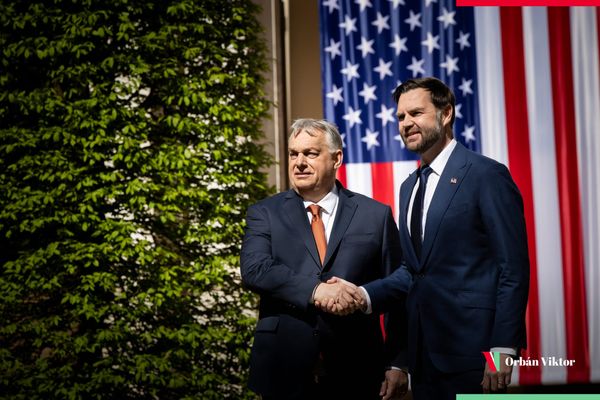
In Europe, Hungary has moved closer to the United States economically and militarily during Vice President JD Vance’s visit, including major defense, energy, and technology agreements — while simultaneously advancing a political alignment that challenges broader EU consensus.
Read the latest ONEST Explained: Hungary Election 2026: Orbán, JD Vance, and the Fight Over Sovereignty
In Ukraine:
- continued Russian strikes caused casualties and energy outages
- Kyiv continues targeting Russian energy infrastructure
- the war remains active, even as global focus shifts elsewhere
OTHER DEVELOPMENTS: DOMESTIC AND GLOBAL
In the United States, the Trump administration is quietly advancing a proposal that could significantly expand federal access to sensitive personal data.
A notice from the Office of Personnel Management would require 65 insurance providers covering more than 8 million Americans — including federal employees, retirees, members of Congress, and their families — to submit monthly reports containing identifiable medical information, including prescriptions and treatment history.
The stated goal is system efficiency and cost analysis.
The concern is different.
Legal and health policy experts warn that such a centralized database could allow the government to track highly sensitive personal behavior — not just for administrative purposes, but potentially for disciplinary or political targeting. The scale of the proposal is unprecedented, and questions remain about both legality and data security.
On trade, negotiations between the United States, Mexico, and Canada are expected to extend beyond the July 1 deadline.
Despite earlier suggestions from President Trump that the U.S. could withdraw from the agreement entirely, U.S. Trade Representative Jamieson Greer signaled that the administration now favors modifying the existing framework rather than abandoning it.
That shift matters.
It suggests that even within an “America First” posture, the economic cost of disruption — particularly in integrated supply chains — is being weighed more heavily than political signaling.
In Asia, two parallel developments point to a broader recalibration.
Relations between India and China, which had deteriorated sharply following border clashes in 2020, are showing signs of cautious thaw. An Indian trade delegation recently traveled to China for the first time in five years, while Beijing described the move as part of a broader normalization effort.
At the same time, Vietnam has consolidated power under To Lam, who now emerges as the country’s most influential leader in decades.
Lam has maintained working relationships with both China and the United States, while advancing economic reforms aimed at elevating Vietnam to upper-income status within the next two decades.
Taken together, these shifts suggest that Asian economies are hedging — not choosing sides, but positioning themselves across multiple power centers.
In Australia, authorities have charged decorated soldier Ben Roberts-Smith with five counts of war crimes related to alleged killings of unarmed civilians in Afghanistan.
The case carries broader implications beyond one individual.
Roberts-Smith had previously denied wrongdoing and lost a high-profile defamation lawsuit against media outlets that reported on the allegations. The charges now move those claims into a criminal framework — highlighting how accountability for past conflicts continues to evolve years after operations end.
Across technology and media, structural pressure is becoming more visible.
Major companies are adjusting to a combination of economic strain and geopolitical disruption:
- Delta Air Lines raised baggage fees as jet fuel shortages — tied directly to the Iran war — ripple through the aviation sector
- Sony Pictures announced layoffs as part of broader restructuring
- Netflix is facing legal challenges in Europe after an Italian court ruled recent price increases unlawful
At the same time, the next phase of technological competition is accelerating.
Anthropic has developed a new AI model it describes as too powerful for public release, instead allowing limited access to major tech firms including Apple, Amazon, and Microsoft to test its capabilities — particularly in cybersecurity contexts.
This reflects a broader shift:
AI is no longer just a commercial race. It is increasingly being treated as critical infrastructure.
HUMANITY
From the far side of the Moon, Earth rises.

Astronauts aboard NASA’s Artemis II mission witnessed the moment — a view that once helped reshape how humanity sees itself.
At the same time, on Earth, a different kind of act unfolded.
A Ukrainian unit, positioned on the front lines, found a stranded cat and dog.
They sent them to safety — 12 kilometers away — by drone.
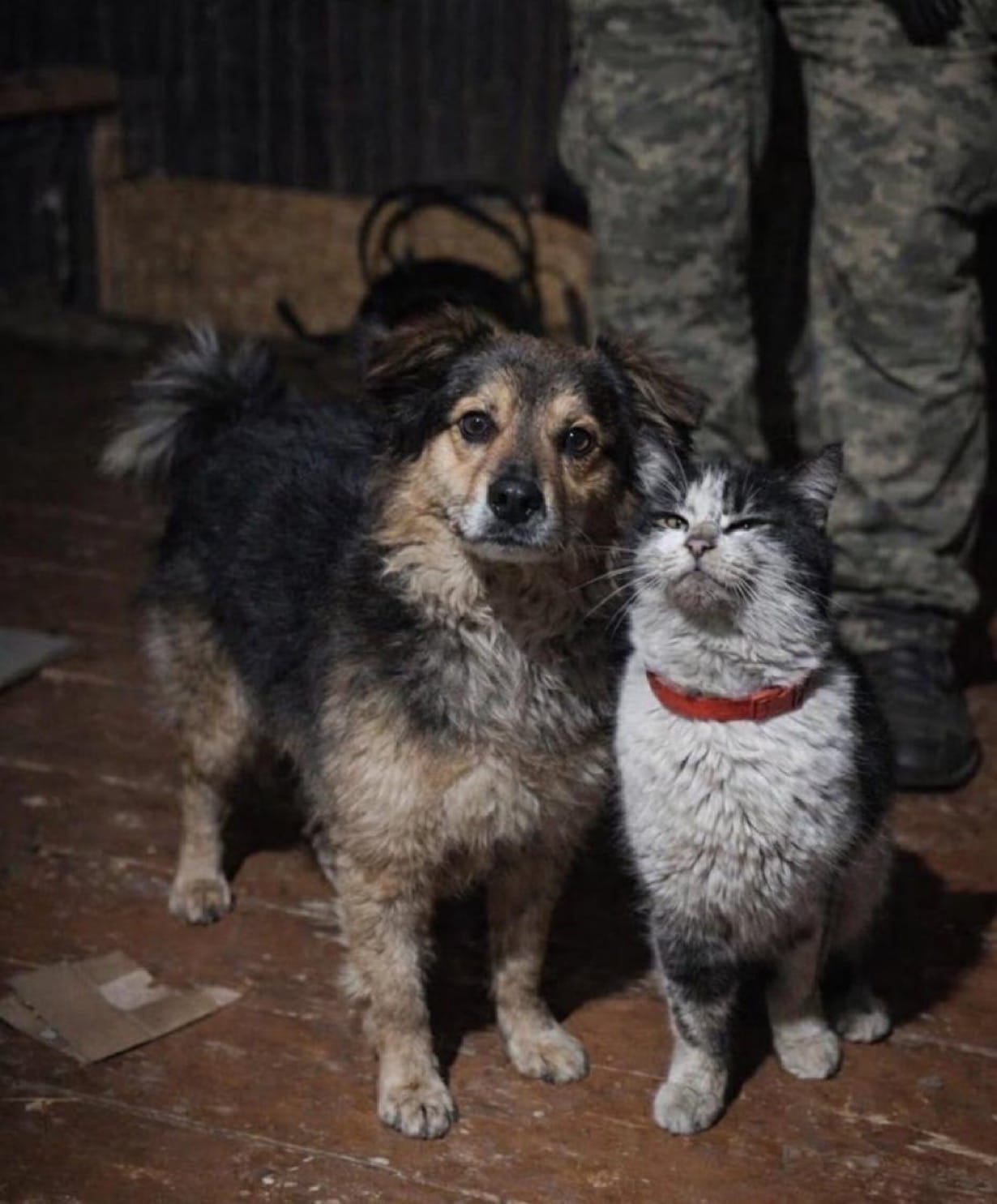
In a war defined by destruction, they chose something else.
Even in the middle of conflict, what we choose to protect still defines us.
And every genuine act — no matter how small — carries more than one value.
COMING UP
Tomorrow’s ONEST+ member deep dive:
War Crimes — definitions, enforcement, history, and what today’s conflicts reveal.
Written by