APRIL 6: Strait Deadline, War Expands, Humanity Breaks Distance Record

– 9 min read

“If I had my choice, take the oil… I’d keep the oil. I would make plenty of money.” — Donald Trump
The war in the Middle East continued to expand over the weekend, both geographically and strategically, as strikes intensified across Iran, Israel, Lebanon, and the Gulf — including near a functioning nuclear power plant.
At the same time, pressure around the Strait of Hormuz has now moved into a defined deadline. President Donald Trump has given Tehran until Tuesday evening to reopen the passage, pairing that demand with direct threats against Iran’s national infrastructure.
And as military escalation deepens on Earth, a parallel moment unfolded in space: astronauts aboard NASA’s Artemis II mission broke the record for the farthest distance humans have ever traveled from the planet — a reminder that even as conflict narrows horizons, exploration continues to expand them.
The weekend did not bring stabilization. It brought expansion.
Strikes continued across multiple theaters simultaneously — Iran, Israel, Lebanon, Iraq, and the Gulf — with both military and civilian infrastructure increasingly affected.
Iran confirmed that the intelligence chief of its Islamic Revolutionary Guard Corps was killed in a strike. Israeli forces targeted what they described as Iran’s largest petrochemical complex. Iranian strikes, in turn, hit the Israeli city of Haifa, killing four people.
At the same time, airstrikes landed near Iran’s Bushehr Nuclear Power Plant — not hitting the facility directly, but close enough to trigger international alarm.
The head of the International Atomic Energy Agency, Rafael Grossi, issued a warning that should not be ignored: continued military activity near an operating nuclear site risks a radiological disaster with consequences far beyond Iran.
The principle is clear — and it has held for decades:
Nuclear facilities are not targets.
The fact that this now needs to be restated tells you how far escalation has already gone.
What had been a strategic pressure point is now an explicit ultimatum.
President Donald Trump has given Iran until the evening of April 7 to reopen the Strait of Hormuz — extending an earlier deadline and tying it directly to potential escalation.
If the Strait is not reopened, he has threatened to destroy Iran’s power plants.
This follows a week of mixed messaging, where the responsibility for securing the Strait had at times been shifted toward other countries. That ambiguity is now gone.
Meanwhile, Tehran has moved toward selective control — negotiating access on a country-by-country basis. Iraqi vessels, for example, were cleared for passage over the weekend, signaling that access may become conditional rather than restored.
That is a fundamentally different model of control.
Over the weekend, U.S. forces carried out a high-risk operation to retrieve an American airman whose F-15 had been shot down inside Iran.
The operation succeeded.
But what followed raised questions.
President Trump acknowledged that some military officials opposed the mission, warning it could have resulted in significant casualties. That assessment stands in tension with the administration’s broader framing of operations as controlled and decisive.
At the same time, U.S. intelligence reportedly deployed deception tactics — spreading false information inside Iran that the airman had already been extracted — to buy time for the rescue.
The operation underscores two realities at once:
A quieter, but significant development came from the information space.
Planet Labs, a major U.S.-based satellite imaging firm, announced it would stop publishing images of Iran and the conflict zone following a request from the U.S. government.
Satellite imagery has been one of the few tools allowing independent tracking of battlefield developments.
Chinese firms, notably, have continued publishing.
This creates an emerging asymmetry in visibility — not just on the battlefield, but in who controls the narrative of it.
The war is increasingly targeting — or affecting — energy systems.
These are not isolated incidents.
They point to a widening pattern: energy infrastructure is becoming both target and consequence.
The economic effects are already visible.
France is offering emergency loans to businesses hit by rising costs. Senegal has banned nonessential government travel due to fuel prices. OPEC+ has agreed to increase output — but capacity constraints remain.
Across the region, positions are becoming more defined.
Oman is engaging Iran directly to ensure vessel transit.
The UAE is warning that any settlement must guarantee access through the Strait and address Iran’s missile and nuclear programs.
Qatar and Italy are calling for de-escalation through dialogue.
Saudi Arabia’s private sector is already contracting under the strain of disrupted supply chains.
Meanwhile, in Lebanon, an Israeli strike on Kfarhata killed seven people, including a four-year-old child.
And in Iraq, explosions were reported in the Kurdistan region as Iranian-linked targets were hit.
The conflict is no longer contained to a central axis.
President Donald Trump’s latest briefing did not clarify U.S. strategy in Iran. It revealed its underlying direction.
He stated repeatedly that he has a plan — but refused to outline it, arguing that disclosure would undermine its effectiveness. That, in itself, is not unusual in wartime. What is unusual is what followed.
Trump openly suggested that the United States should “take the oil” from Iran, framing it not as a byproduct of war, but as a strategic and economic objective.
“If I had my choice, take the oil… I’d keep the oil. I would make plenty of money.”
That statement matters beyond rhetoric.
The seizure of natural resources in an armed conflict is explicitly prohibited under international law. Framing it as a policy option signals a shift — from stated security objectives toward resource-driven justification.
He also claimed that Iranian civilians are asking the United States to continue bombing, “even though the bombs land right where they live.” There is no independent verification of such claims, and they stand in sharp contrast to the humanitarian realities emerging from the region.
On alliances, Trump’s tone hardened further.
He criticized NATO allies for refusing to support U.S. operations, despite the fact that without access to European bases, the current campaign would be significantly more difficult to sustain. At the same time, he suggested the United States could impose charges on international shipping through the Strait of Hormuz — effectively proposing control over one of the world’s most critical trade routes.
The briefing also exposed internal inconsistencies.
Trump stated that weapons provided to Kurdish groups had been withheld from the Iranian population, accusing intermediaries of failing to enable internal uprising. Kurdish sources have denied receiving such transfers altogether.
He acknowledged that some U.S. military officials opposed the kind of the weekend rescue operation, warning it could have resulted in significant casualties — a notable departure from earlier portrayals of the operation as controlled and widely supported.
He further suggested that negotiations with Iran are progressing, while simultaneously issuing ultimatums and threats of expanded strikes on civilian infrastructure.
Taken together, the message is not mixed — it is layered.
These are not aligned tracks.
They point to a strategy that is either still being defined — or deliberately kept fluid.
The briefing did not reduce uncertainty.
It made clear that uncertainty is now part of the strategy itself.
The effects of the Iran war are no longer contained to the Middle East. They are actively reshaping political, military, and economic dynamics across multiple regions — often in ways that are not immediately visible when looking at the conflict in isolation.
In Ukraine, the war’s indirect impact is becoming structural. Kyiv is not only continuing battlefield operations — including reported advances across multiple axes — but is simultaneously expanding its diplomatic and security footprint. New cooperation agreements with Syria and Turkey signal a broader strategy: leveraging wartime experience, particularly in drone and defense capabilities, to build long-term partnerships beyond Europe.
At the same time, there is a growing risk that Ukraine’s position becomes tied to developments elsewhere. As discussions emerge about linking U.S. support for Ukraine to European involvement in securing the Strait of Hormuz, Kyiv’s battlefield reality is increasingly influenced by decisions made far outside its immediate theater.
Egypt is positioning itself as a central diplomatic node. Cairo is actively engaging both U.S. and Iranian counterparts in parallel, attempting to broker de-escalation proposals. This is not new for Egypt — but the scale and urgency of current engagement suggest a recognition that the conflict’s economic and security spillover could directly destabilize the region.
Across Central Asia, a quieter realignment is underway.
Afghanistan is pushing to expand trade with neighboring states from $2.7 billion to $10 billion within the next few years, with active participation from Kazakhstan, Kyrgyzstan, Tajikistan, Turkmenistan, and Uzbekistan. This comes despite ongoing instability and reflects a broader calculation: economic integration may be pursued even in the absence of full political normalization.
At the same time, Chinese-mediated talks between Afghanistan and Pakistan are advancing, even as cross-border accusations and tensions persist. The dual-track approach — negotiation alongside continued friction — mirrors patterns now seen in other regions.
In East Asia, intelligence assessments suggest that Kim Jong Un may be preparing a generational transition of power, with his daughter increasingly positioned in public military imagery. This would mark the first potential shift away from exclusively male leadership in North Korea’s history and could redefine both internal stability and external signaling in the region.
In Europe, Hungary’s upcoming elections are being framed not as a domestic contest, but as a geopolitical choice.
Prime Minister Viktor Orbán and his government are positioning the vote as a choice between “peace and security” under his leadership — aligned with Moscow — or "the risk of Hungary being drawn into the war in Ukraine". That framing is being reinforced through widespread messaging, including prominent imagery of Ukrainian President Volodymyr Zelenskyy across the country.
At the same time, U.S. Vice President JD Vance is set to visit Hungary, where he described Orbán as a “good friend” and signaled that discussions will center not only on bilateral relations, but also on Europe and the war in Ukraine.
That visit matters.
It places the United States — at the highest political level — directly into a domestic political environment already shaped by pro-Russian narratives and election messaging tied to the Ukraine war. It also signals a degree of alignment, or at minimum tolerance, for Orbán’s positioning at a moment when European unity remains critical.
Meanwhile, Orbán’s claim that Ukraine was behind an attempted pipeline attack was directly rejected by Serbian officials — underscoring how quickly unverified narratives are entering domestic political strategy.
Inside the UN system, discussions are advancing around structural reform under the UN80 initiative, including the potential merger of UN Women and UNFPA.
At the same time, humanitarian crises are intensifying.
The UN is scaling up operations in Sudan as the conflict approaches its third year.
Cuba is facing a worsening humanitarian situation driven by prolonged energy constraints and storm damage.
Domestically, policy shifts continue.
The administration has moved to terminate agreements protecting transgender students in multiple schools.
At the same time, diplomatic engagement is continuing in parallel — but with a clear shift in focus.
At the State Department, Secretary Marco Rubio met with Uzbekistan’s presidential administration chief Saida Mirziyoyeva and New Zealand Foreign Minister Winston Peters, while Deputy Secretary Christopher Landau advanced the U.S.–North Macedonia Strategic Dialogue, signaling continued effort to reinforce ties across Central Asia and key Indo-Pacific partners.
Beyond meetings, the United States signed a five-year global health cooperation agreement with Cambodia under the administration’s America First Global Health Strategy, committing more than $30 million in U.S. funding alongside additional Cambodian investment. The agreement focuses on infectious disease prevention, laboratory systems, and pandemic preparedness — and is part of a broader network of bilateral health deals now totaling over $20 billion in combined commitments.
Taken together, this is not routine diplomacy.
It reflects a parallel track: while military resources are concentrated in the Middle East, the United States is actively reinforcing strategic relationships and infrastructure in regions that shape long-term global competition — particularly in Asia.
A deep dive into Trump’s expected $1.5T defense budget, the break from multilateralism, NATO strain, Ukraine spillover, and who benefits.
Six days into their mission, astronauts aboard NASA’s Artemis II have now traveled farther from Earth than any humans in history.
At 252,752 miles, they surpassed the record set by Apollo 13 in 1970.
From aboard the Orion spacecraft, astronaut Jeremy Hansen reflected:
“We choose this moment to challenge this generation and the next to make sure this record is not long-lived.”
The crew has:
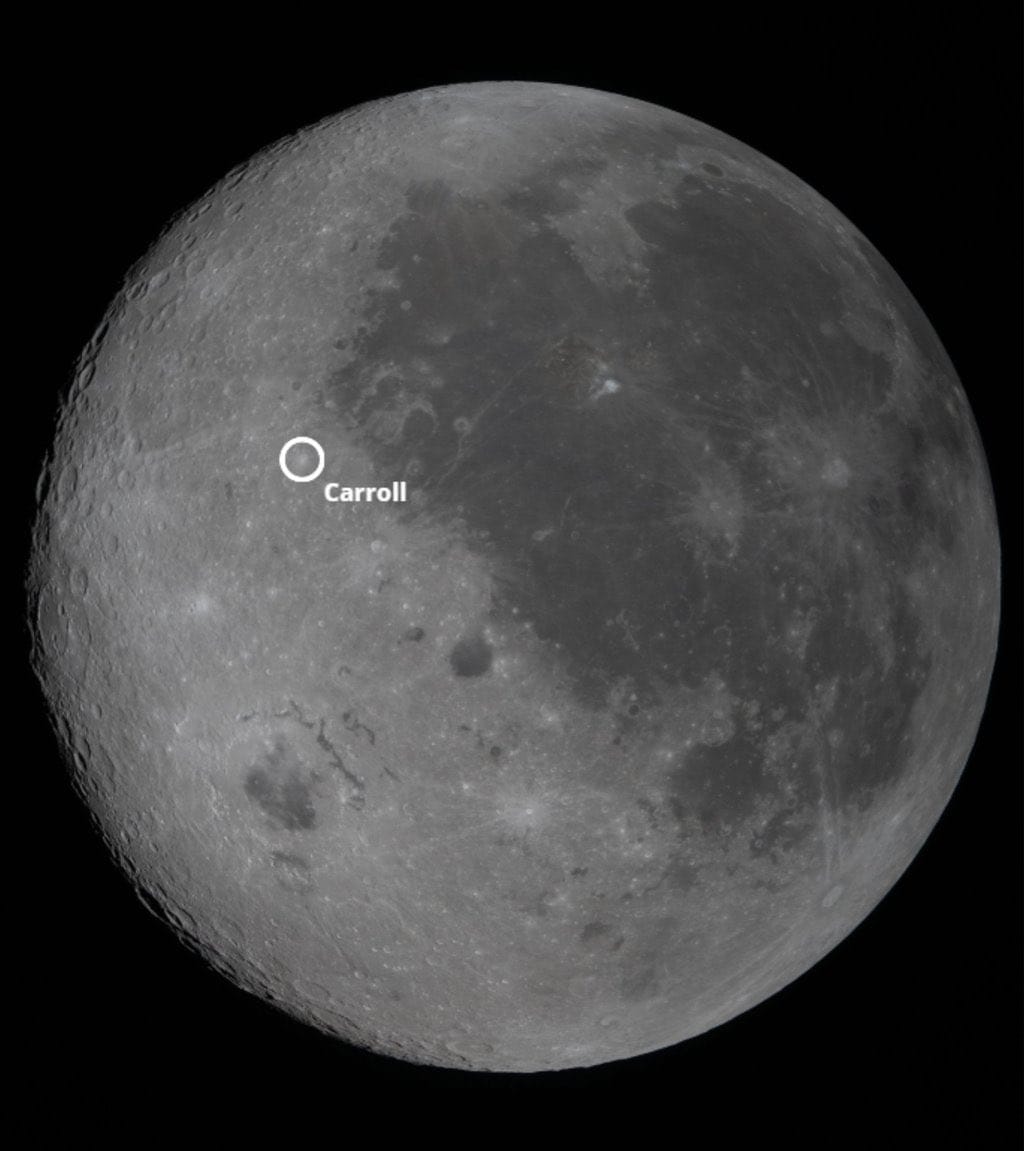
They also named a lunar crater "Carroll" in honor of Commander Reid Wiseman’s late wife — a quiet moment of humanity within a mission defined by distance.
As the Artemis II crew moves farther from Earth than any humans before them, they carry something with them that does not change with distance.
Perspective.
A record can be measured in miles.
But what gives it meaning is not how far we go — it is what we choose to carry with us when we get there.
Every genuine act — even at the edge of space — carries more than one value. Not all of them are visible.